
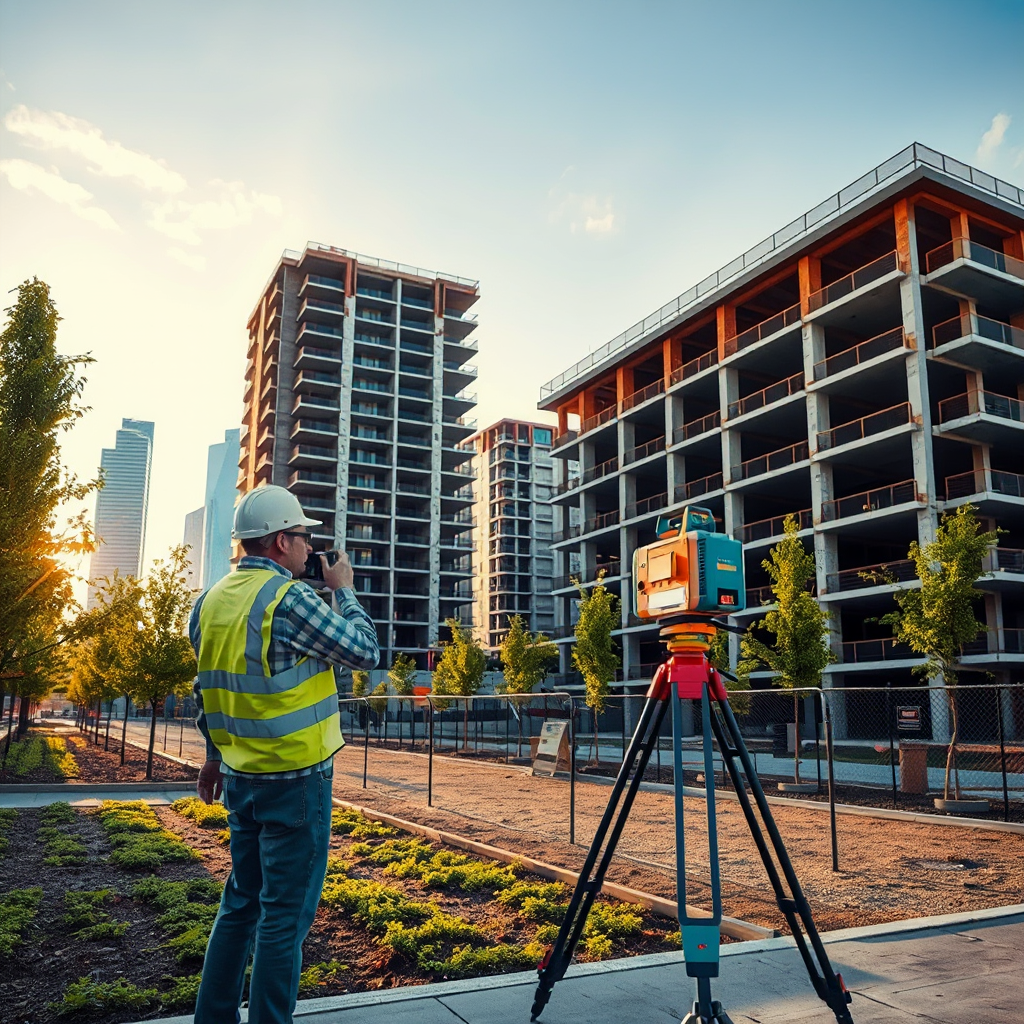
Toronto Green Standard Compliance
3D Laser Scanning for Toronto Green Standard (TGS) Compliance
Every new development in Toronto submitted for Site Plan Approval must comply with the Toronto Green Standard Version 4 — and the accuracy of your submitted data determines how fast you get your Notice of Approval Conditions (NOAC). Lightbound 3D provides the precise 3D laser scanning and Scan-to-BIM documentation that architects, developers, and VDC managers need to meet TGS requirements without delays.
What is the Toronto Green Standard (TGS)?
The Toronto Green Standard is the City of Toronto's mandatory sustainable design and performance framework for all new private and city-owned developments. Version 4 came into effect May 1, 2022, and applies to all new Site Plan Applications and Zoning Bylaw Amendment submissions. Tier 1 compliance is mandatory — without it, your application will not receive Site Plan Approval. Tier 2 and above are voluntary but unlock significant Development Charge Refunds equivalent to 20% of development charges.
The TGS covers five performance categories: air quality, building energy and emissions, water quality and efficiency, ecology and biodiversity, and waste and circular economy. For most development teams, the building energy and emissions requirements — specifically the Design Development Stage Energy Report (DDSER) — represent the most technically demanding submission requirement.
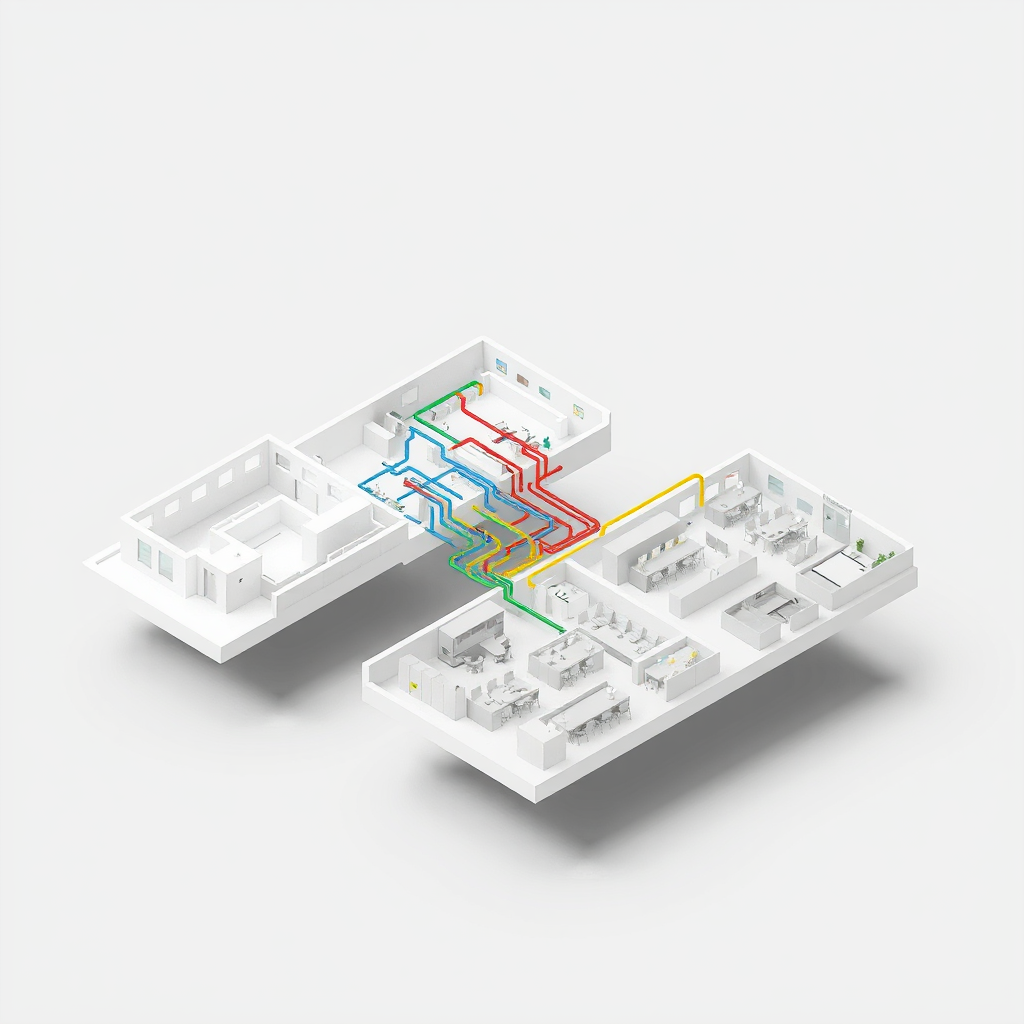
Where 3D Scanning Fits Into TGS Compliance
Accurate as-built data is the foundation of a compliant TGS submission. Whether you're working on a new build, a major renovation, or an addition to an existing structure, the City requires precise building documentation including:
— Accurate massing models and window-to-wall ratios for energy modelling
— Thermal envelope dimensions for the Design Development Stage Energy Report
— Material quantities for Material Emissions Assessments (A1-A5 embodied carbon)
— BOMA 2017/2020 floor area calculations for lease and development charge purposes
— Glazing percentages for Bird-Friendly Design compliance (85% treatment rule)
Guessing or estimating any of these values creates risk. A rejected application due to "insufficient data" or "incorrect massing" can cost your project months of carrying costs and delay your NOAC. 3D laser scanning eliminates that risk by capturing all of these measurements in a single site visit, to within 2–3 millimetres.
How Lightbound 3D Supports Your TGS Submission
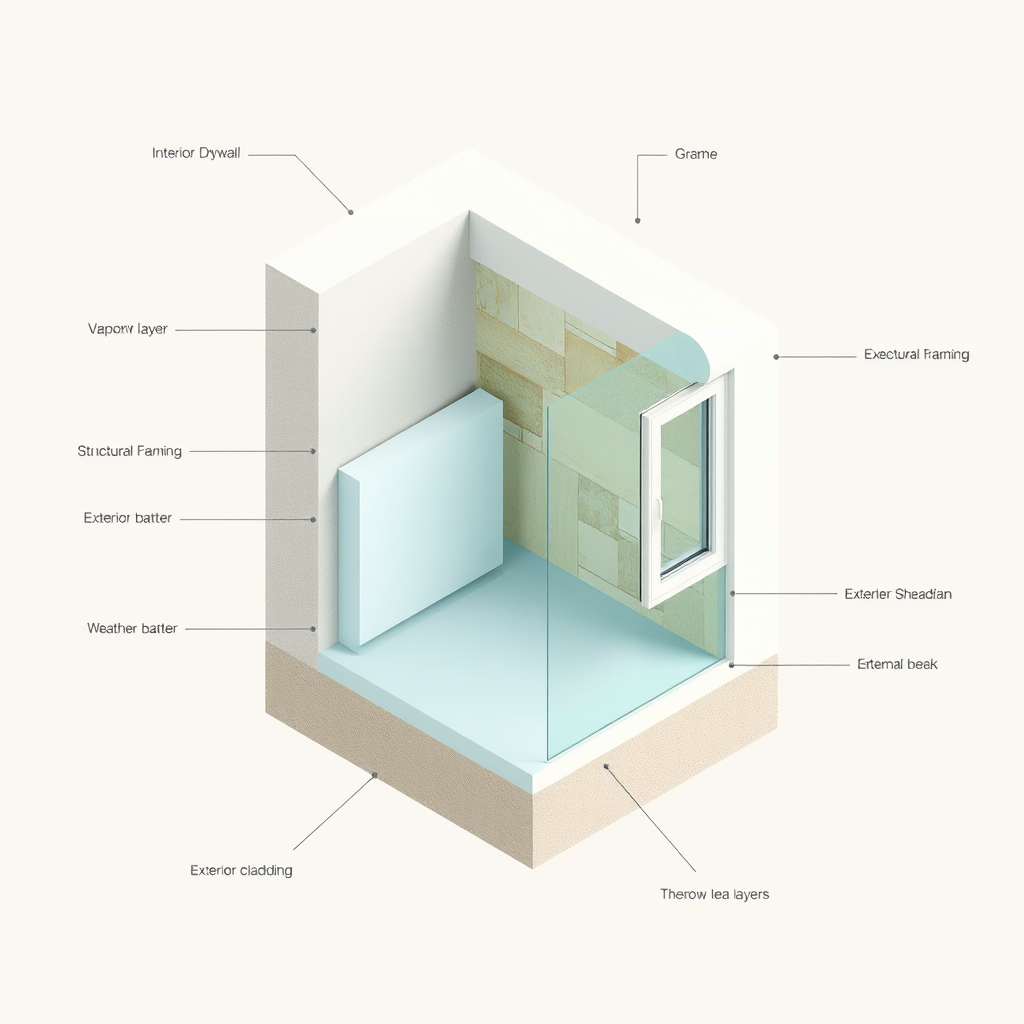
Lightbound 3D provides end-to-end 3D scanning and Scan-to-BIM documentation for Toronto development projects, delivering the precise spatial data your energy modeller and design team need to complete a compliant TGS submission.
Our TGS-related deliverables include:
As-Built Floor Plans — Accurate, scalable floor plans for all levels, ready for permit submission in DWG or PDF format.
Revit-Ready BIM Models — Full building models including structural, architectural, and MEP elements at your required Level of Development (LOD 200–400), compatible with your energy modelling workflow.
Massing & Envelope Documentation — Precise exterior envelope capture including wall assemblies, window locations, and glazing percentages — the exact inputs your energy modeller needs for the DDSER.
Material Quantity Take-Offs — Accurate volume calculations for concrete, masonry, and structural elements from scan data, enabling defensible Material Emissions Assessments for embodied carbon calculations.
Point Cloud Deliverables — Registered, cleaned point clouds delivered in E57, RCP, or LAS format for use in AutoCAD ReCap, Revit, or Navisworks.
All scanning is completed in a single site visit with minimal disruption to active sites. Deliverables are typically ready within 5–10 business days.
See an example of our Scan-to-BIM workflow in action on a recent custom estate project in Kleinburg, where 3D laser scanning, point cloud registration, and Revit modelling were delivered as an integrated package.
TGS Compliance Timeline — When You Need Scan Data
The City requires TGS documentation at two key stages:
1. Prior to Site Plan Approval — The Design Development Stage Energy Report (DDSER) must be submitted before SPA is granted. This requires accurate as-built or existing conditions data for any renovation or addition project.
2. At Construction Tender Stage — The As-Constructed Energy Report must reflect as-built construction drawings. A scan at this stage verifies that the as-built conditions match the approved design.
Engaging Lightbound 3D early in the design process ensures your energy modeller has verified spatial data before the DDSER is prepared — preventing the "garbage in, garbage out" scenario that leads to rejected submissions.
Why Toronto Developers Choose Lightbound 3D
Lightbound 3D is a Toronto-based 3D scanning and BIM company with deep experience across the GTA's commercial, residential, and mixed-use development sectors. We understand the logistical realities of scanning in Toronto — active construction sites, occupied buildings, heritage structures, and tight submission timelines.
Our team delivers:
— Survey-grade accuracy to within 2–3mm
— Single site visit capture for most projects
— Revit-ready deliverables compatible with all major energy modelling workflows
— Fast turnaround — most projects delivered within 5–10 business days
— Experience across Downtown Toronto, Mississauga, Brampton, Vaughan, Markham, and the broader GTA
FAQ‘S
-
TGS v4 applies to all new planning applications — including Zoning Bylaw Amendments, Site Plan Control, and Plans of Subdivision — submitted on or after May 1, 2022. It applies to both private and city-owned developments. If your project requires Site Plan Approval in Toronto, TGS v4 compliance is mandatory.
-
The NOAC is the City's formal confirmation that your Site Plan Application meets all requirements and conditions. It is a critical milestone in the development approval process — without it, you cannot proceed to building permit. Accurate 3D scan data submitted with your DDSER and supporting documentation reduces the risk of the City requesting revisions, helping you secure your NOAC faster.
-
Yes. Our scanning equipment captures complete building data quickly and with minimal disruption. Most floors can be scanned in a matter of hours. We work around occupancy schedules and active construction activity to minimize impact on your operations.
-
TGS v4 requires developers to conduct a Material Emissions Assessment covering embodied carbon from A1 to A5 (raw material extraction through construction). Accurate material quantities — concrete volumes, structural steel, masonry — are required inputs. 3D laser scanning delivers precise volumetric measurements from existing conditions, eliminating estimation errors that can invalidate your assessment.
-
Yes. Our scan data can be used to produce BOMA 2017 and BOMA 2020 compliant floor area calculations, which are required for development charge purposes and leasing documentation on commercial projects.
Planning a TGS submission?
Get accurate scan data before your energy modeler starts.
How can we help you?
Looking for a quote, more information about our 3D scanning and BIM services, or a demo? Share your details, and our team will provide the best solutions for your project in Toronto,GTA, and Southern Ontario.