If you've ever tried to renovate a building, apply for a permit, or hand off a construction project in Toronto, chances are someone has asked you for as-built drawings. But what exactly are they, how do you get them, and why does it seem to take forever?
This guide answers those questions — and explains why more architects, engineers, and contractors in the GTA are turning to 3D laser scanning to get accurate as-builts in a fraction of the time.
What Are As-Built Drawings?
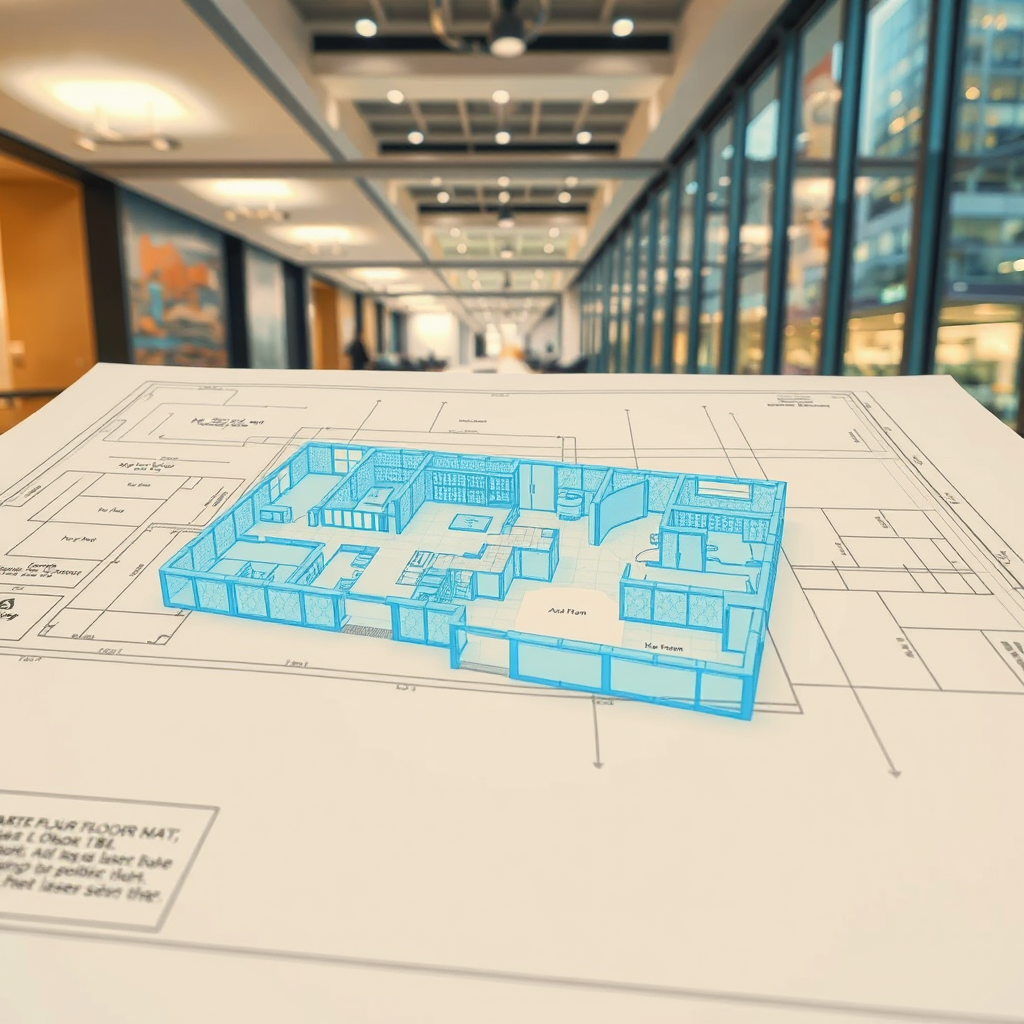
As-built drawings (also called record drawings or as-built plans) are architectural or engineering drawings that document a building as it actually exists — not as it was originally designed. They reflect every change made during construction, every deviation from the original blueprint, and every feature of the structure as it stands today.
They typically include:
Floor plans with accurate dimensions
Reflected ceiling plans
Electrical and mechanical layouts
Structural elements such as columns, beams, and load-bearing walls
Door and window schedules
Exterior elevations
The key word is accurate. An as-built drawing is only useful if it reflects reality — and that's where traditional methods often fall short.
When Do You Need As-Built Drawings in Toronto?
As-built drawings are required in a wide range of situations. The most common include:
Renovation and retrofit projects. Before any structural or mechanical work begins, contractors and architects need to understand what's already there. As-builts prevent costly surprises mid-project.
Building permit applications. The City of Toronto and most GTA municipalities require accurate floor plans and elevations as part of permit submissions for alterations, additions, or change-of-use applications.
Property transactions. Buyers, lenders, and insurers increasingly require accurate documentation of a building's existing conditions — especially for commercial and industrial properties.
Facility management. Building owners and managers need up-to-date drawings to plan maintenance, manage space, and coordinate tenant fit-outs.
Heritage preservation. Toronto has a significant stock of older buildings where original drawings no longer exist or are inaccurate. As-builts are essential before any restoration work.
Legal and insurance disputes. Accurate documentation of a building's existing state can be critical in resolving disputes over construction defects or damage claims.
How Are As-Built Drawings Produced?
There are two main approaches: traditional field measurement and 3D laser scanning.
Traditional field measurement involves a technician physically measuring a space with tape measures, laser distance meters, and hand sketches, then drafting the drawings in CAD software. It's time-consuming, error-prone, and often results in drawings with tolerances of 1–3 inches — which can cause serious problems downstream.
3D laser scanning uses a high-precision scanner to capture millions of data points across a space in minutes, generating a dense point cloud that accurately captures every surface, structural element, and feature of the building to within 2–3 millimetres. That point cloud is then used to produce highly accurate CAD drawings or full BIM (Building Information Models) in Revit.
For anything beyond a simple single-room renovation, laser scanning is faster, more accurate, and ultimately more cost-effective — because errors caught in the drawing stage cost far less than errors caught on site.
As-Built Drawings vs. Scan-to-BIM: What's the Difference?
As-built drawings are 2D representations — floor plans, elevations, sections. Scan-to-BIM takes the same laser scan data and produces a full 3D model in Revit or AutoCAD, where walls, floors, ceilings, MEP systems, and structural elements are modelled as intelligent objects.
For simple permit applications or renovation planning, 2D as-builts are often sufficient. For complex commercial projects, mechanical coordination, or clash detection, a full BIM model is the right tool.
Lightbound 3D offers both — we can produce 2D as-built drawings from our laser scan data or deliver a full Scan-to-BIM model depending on what your project requires.
What Do As-Built Drawings Cost in Toronto?
Pricing varies based on the size and complexity of the space, the level of detail required, and the deliverable format (2D CAD vs. full BIM model).
As a general guide:
Small spaces (under 2,000 sq ft): Starting from $1,500
Mid-size commercial (2,000–10,000 sq ft): $2,500–$6,000
Large or complex buildings: Quoted on project scope
Traditional measurement-based as-builts may appear cheaper upfront but often require return site visits to verify measurements — adding cost and delays. Laser scanning captures everything in a single site visit, reducing overall project time and risk.
Why Toronto Projects Choose Lightbound 3D
Lightbound 3D is a Toronto-based 3D scanning and BIM company serving architects, engineers, contractors, and property owners across the GTA. We use professional-grade laser scanning equipment to capture existing conditions accurately and efficiently, then deliver as-built drawings or Scan-to-BIM models in the format your project requires.
Our work spans commercial offices, residential buildings, heritage properties, industrial facilities, and retail spaces across Toronto, Mississauga, Brampton, Vaughan, and the broader GTA.
Ready to get started? Request a quote for as-built drawings →
Or learn more about our Scan-to-BIM services in Toronto →
Frequently Asked Questions
-
With 3D laser scanning, most projects are completed within 3–7 business days from the site visit. Complex buildings or large floor plates may take longer. Traditional measurement-based methods typically take 2–4 weeks.
-
Yes — the City of Toronto requires accurate existing condition drawings as part of most permit applications for alterations, additions, or change-of-use. As-built drawings produced from laser scan data are accepted by the City and meet the required accuracy standards.
-
Construction drawings (also called design drawings or working drawings) show what a building is intended to look like when built. As-built drawings show what the building actually looks like after construction — including any deviations from the original design.
-
Yes. This is one of the most common scenarios we encounter in Toronto. Laser scanning captures the existing conditions of any building regardless of age or whether original drawings exist.
-
We deliver drawings in AutoCAD (.dwg), PDF, and Revit (.rvt) depending on project requirements. We'll confirm the required format before starting your project.