3D Scanning Software vs. Hiring a Specialist: What's Right for Your Project?
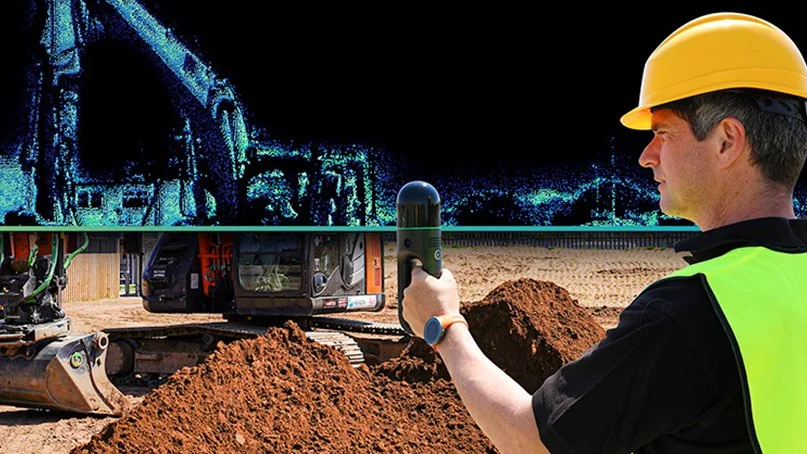
When someone searches for "3D scanning Toronto" today, they'll find two very different kinds of results: local specialists like Lightbound 3D, and global software platforms promising to let anyone capture and manage 3D data themselves. Tools like Matterport, HxDR, and DocuSketch have genuinely changed what's possible — but they've also created a lot of confusion about what a 3D scanning specialist actually does that a platform can't.
This post answers that question directly.
What self-serve 3D scanning platforms actually do
Consumer and prosumer platforms like Matterport (virtual tours), HxDR (cloud-based digital twin management), and similar tools are designed around a specific premise: give a non-specialist a camera and app, and let them capture a space with minimal training.
For certain use cases, this works well. A property manager doing a basic condition report. A homeowner documenting a space before renovations. An insurance adjuster needing a quick visual reference. In those scenarios, a self-serve platform is fast, affordable, and sufficient.
What these platforms produce is a visual experience — a navigable 360° environment that looks impressive on screen. What they do not reliably produce is accurate, actionable spatial data that professionals can build on.
What a 3D scanning specialist delivers that a platform cannot
When architects, engineers, contractors, and developers hire Lightbound 3D, they're not paying for a walkthrough video. They're paying for deliverables with professional accountability behind them.
1. Millimetre-accurate point cloud data
Professional-grade laser scanners — the kind used in Scan-to-BIM and as-built documentation — capture geometry at accuracies of 1–3mm. Consumer Matterport hardware operates at roughly ±1% of distance, which sounds small until you're trying to fit a structural beam or calculate code-compliant clearances. The difference matters enormously in renovation, fit-out, and MEP coordination work.
2. BIM-ready deliverables
A point cloud is raw data. A Revit model, a coordinated IFC file, or a set of as-built drawings is a deliverable. Scan-to-BIM is the process of converting one into the other — and it requires trained technicians who understand LOD (Level of Detail) requirements, BIM standards, and how the model will actually be used downstream. No platform automates this. It requires human expertise.
3. Professional accountability
When a structural engineer or heritage consultant commissions as-built documentation from Lightbound 3D, they're getting a deliverable they can stake their own professional work on. A self-generated Matterport scan carries no such guarantee. If the dimensions are wrong, there's no professional liable for the error.
4. Complex environments
Large floor plates, multi-storey buildings, heritage structures with irregular geometry, sites with low light or reflective surfaces — these all require scanner selection, scan registration strategy, and field expertise that a consumer app cannot replicate. Professional laser scanners use sophisticated registration algorithms across dozens of scan positions. Getting it right requires judgment, not just hardware.
5. Integrated deliverables
A specialist combines the right tools for the job: terrestrial laser scanning for large commercial spaces, Matterport for immersive client presentations, drone photogrammetry for exterior and site work. A platform locks you into one capture method and one output format.
When a platform is the right choice
To be clear: self-serve platforms have their place. If you need:
A basic virtual walkthrough for a residential listing
Internal condition documentation with no design or engineering downstream
A quick visual reference that doesn't need to be dimensionally accurate
A simple space hosted and shared online affordably
...then a Matterport camera and a monthly subscription may be all you need. We won't pretend otherwise.
When you need a specialist
Hire a 3D scanning specialist when:
You need accurate as-built dimensions for design, renovation, or construction
Your deliverable is a BIM model, CAD drawing, or set of as-built plans
The project involves complex geometry, multiple floors, or large square footage
Your downstream team (architect, engineer, contractor) needs data they can build on
You need drone integration, exterior capture, or multi-method documentation
There is professional liability attached to the accuracy of the deliverable
You need fast turnaround with guaranteed quality — not trial and error
The Toronto market context
In the GTA's competitive construction and real estate market, the cost of an inaccurate as-built model shows up quickly — in RFIs, change orders, and coordination failures that cost far more than the original scan. Professional 3D scanning from $1,500 is one of the highest-ROI investments on any renovation or fit-out project when the alternative is a costly field measurement error mid-construction.
For real estate, Lightbound's Matterport virtual tours start at $249 — a specialist-produced result that includes professional scan registration, properly hosted tours, and full floor plan integration. The comparison to a self-managed platform setup isn't just quality — it's time.
Questions? We're happy to discuss your specific project.
Lightbound 3D serves architects, engineers, developers, property managers, and real estate professionals across Toronto and the GTA. If you're weighing your options, contact us at hello@lightbound3d.com or (437) 775-9000 and we'll give you a straight answer about what makes sense for your project.