

The Importance of Accurate Revit Modeling in Construction
At Lightbound 3D, we provide professional Revit modeling services in Toronto, helping our clients achieve design accuracy and project efficiency. In this article, we’ll explore why accurate Revit modeling is so critical for successful construction projects.
In the world of modern construction, precision is everything. From skyscrapers that touch the clouds to intricate home renovations, every project demands careful planning, accurate design, and flawless execution. One of the most powerful tools that make this possible is Revit modeling — a Building Information Modeling (BIM) software that has revolutionized the way architects, engineers, and contractors design and manage projects.
At Lightbound 3D, we provide professional Revit modeling services in Toronto, helping our clients achieve design accuracy and project efficiency. In this article, we’ll explore why accurate Revit modeling is so critical for successful construction projects.
What is Revit Modeling?
Revit is a powerful BIM (Building Information Modeling) software developed by Autodesk. It allows designers and builders to create detailed, data-rich 3D models of buildings and structures. Unlike traditional 2D CAD drawings, Revit models are dynamic — they contain real-world information about materials, dimensions, and systems, making them invaluable for project planning.
Key Benefits of Revit Modeling:
3D Visualization: See a complete 3D view of your project before construction begins.
Data-Driven Design: Every element of the model is linked with detailed data (e.g., material properties, dimensions).
Seamless Collaboration: Architects, engineers, and contractors can work together on a single, synchronized model.
Accurate Cost Estimation: Calculate material quantities and costs directly from the model.
Why Accuracy in Revit Modeling Matters
Inaccurate or poorly designed Revit models can lead to significant issues during construction, including:
Design Errors: Misaligned walls, incorrect dimensions, or misplaced elements can lead to costly mistakes.
Wasted Materials: Inaccurate models can cause over-ordering of materials or inefficient use.
Project Delays: Errors discovered during construction can cause significant delays.
Increased Costs: Fixing design errors during construction is far more expensive than correcting them in the model.
Case Study: Avoiding Costly Design Errors
At Lightbound 3D, we recently worked on a complex commercial project in Toronto. The client needed an accurate BIM model to plan and coordinate the installation of MEP (Mechanical, Electrical, and Plumbing) systems. Using our Revit modeling services, we detected a critical design conflict between the HVAC ducts and structural beams before construction began. By resolving this in the model, the client saved thousands of dollars in potential rework costs.
Top Use Cases for Accurate Revit Modeling
Architectural Design: Create precise building designs with all necessary details.
MEP Coordination: Design and coordinate mechanical, electrical, and plumbing systems without clashes.
Structural Analysis: Simulate and test structural integrity before construction.
As-Built Documentation: Capture existing conditions and convert them to accurate Revit models (Scan to BIM).
Industries That Benefit:
Commercial Real Estate
Residential Development
Industrial Facilities
Public Infrastructure
How Lightbound 3D Delivers Accurate Revit Modeling in Toronto
At Lightbound 3D, we specialize in delivering precise and reliable Revit modeling services in Toronto for architects, engineers, and contractors. Our approach includes:
Precise Scan-to-BIM: Using advanced laser scanning technology, we capture existing conditions and convert them into accurate Revit models.
Collaborative Design: Our team works closely with clients to ensure that every detail is correctly modeled.
Error Detection and Resolution: We proactively identify and resolve design conflicts before they become costly problems.
Our Revit Modeling Services Include:
3D Architectural Modeling
MEP Coordination Models
Structural Modeling and Analysis
Scan to BIM for As-Built Documentation
Get Accurate Revit Models for Your Project – Contact Us Today
Don’t let design errors and inaccuracies derail your construction project. Trust Lightbound 3D for precise, reliable Revit modeling services in Toronto. Contact us today to discuss your project and discover how our BIM expertise can save you time and money.

Laser Measurement of the Elevator Shafts at Queens Quay Terminal
At Lightbound 3D, we’re always excited to work on projects that blend history, innovation, and technology. Our recent endeavor at the iconic Queens Quay Terminal in Toronto was no exception. This project allowed us to showcase the power of advanced laser measurement techniques in documenting complex architectural structures, specifically the elevator shafts of this historic building.
At Lightbound 3D, we’re always excited to work on projects that blend history, innovation, and technology. Our recent endeavor at the iconic Queens Quay Terminal in Toronto was no exception. This project allowed us to showcase the power of advanced laser measurement techniques in documenting complex architectural structures, specifically the elevator shafts of this historic building.
The Historical Significance of Queens Quay Terminal
Queens Quay Terminal, a landmark on Toronto’s waterfront, is not just a building; it's a piece of the city’s rich history. Originally constructed in the 1920s as a warehouse for the Toronto Harbour Commission, the building was transformed in the early 1980s into a mixed-use space that includes residential, commercial, and retail areas. The renovation preserved the building’s historical façade while introducing modern amenities, making it a unique blend of old and new.
The elevator shafts at Queens Quay Terminal are integral to the building's function, serving both residents and visitors. Given the building’s age and the complexity of its layout, capturing precise measurements of these shafts was crucial for future renovations and maintenance.
The Challenge: Documenting Complex Spaces
The project at Queens Quay Terminal presented several challenges that required meticulous planning and execution. The elevator shafts, being narrow, vertically extensive, and intricate in design, demanded a high level of accuracy in measurement. Traditional measurement methods would have been time-consuming and potentially inaccurate due to the shafts' depth and the building's complex architecture.
Our team at Lightbound 3D knew that laser measurement technology was the ideal solution for this project. We chose to utilize our advanced laser scanning equipment to capture every detail of the elevator shafts, ensuring that the data collected would be precise and comprehensive.
The Process: Harnessing Laser Measurement Technology
Laser scanning is a powerful tool in the world of building documentation, offering unparalleled accuracy and speed. For the Queens Quay Terminal project, we deployed a high-resolution laser scanner capable of capturing millions of data points per second. This technology allowed us to create a detailed point cloud of the elevator shafts, capturing even the most minute details.
The process began with a thorough survey of the building’s layout, ensuring that we could access all necessary points for scanning. Our team then strategically placed the scanner at various levels within the elevator shafts to capture the full depth and complexity of the space. Each scan was meticulously planned to ensure there was no overlap or data loss, resulting in a complete and accurate representation of the shafts.
Once the scanning was complete, we processed the data to create a 3D model of the elevator shafts. This model is not just a static image; it’s a dynamic tool that can be used for a variety of purposes, from planning future renovations to conducting structural analyses. The model can be viewed from any angle, allowing stakeholders to examine the shafts in unprecedented detail.
The Outcome: A Foundation for Future Projects
The success of the laser measurement project at Queens Quay Terminal is a testament to the capabilities of modern technology in preserving and enhancing historic structures. The data we captured will serve as a valuable resource for architects, engineers, and building managers as they plan future renovations and ensure the building's longevity.
For Lightbound 3D, this project was more than just another job—it was an opportunity to contribute to the preservation of one of Toronto’s most beloved landmarks. By using cutting-edge laser measurement technology, we were able to document the elevator shafts with a level of precision that will support the building’s upkeep for years to come.
As Toronto continues to grow and evolve, projects like this remind us of the importance of balancing innovation with preservation. At Lightbound 3D, we’re proud to be at the forefront of this effort, using technology to bridge the past and the future.
Whether it’s capturing the intricate details of an elevator shaft or documenting the full scope of a building, we’re committed to delivering accurate, high-quality results that stand the test of time. The Queens Quay Terminal project is just one example of how we’re making a difference, one scan at a time.

The Art and Science of 3D Scanning in Building Construction: Documenting Radiant Floor Heating
Building a house is a multifaceted project, one that integrates numerous elements to create a cohesive and functional living space. One crucial phase in this complex process is the installation of radiant floor heating. At Lightbound 3D, we leverage cutting-edge 3D scanning technology to meticulously document this stage, ensuring that every detail is captured accurately before the permanent top floor is installed. This documentation is vital not only for quality assurance but also for future reference and peace of mind for homeowners and builders alike.
Building a house is a multifaceted project, one that integrates numerous elements to create a cohesive and functional living space. One crucial phase in this complex process is the installation of radiant floor heating. At Lightbound 3D, we leverage cutting-edge 3D scanning technology to meticulously document this stage, ensuring that every detail is captured accurately before the permanent top floor is installed. This documentation is vital not only for quality assurance but also for future reference and peace of mind for homeowners and builders alike.
Understanding Radiant Floor Heating
Before delving into the specifics of how we document radiant floor heating, it’s essential to understand what it is and why it's an integral part of modern homebuilding.
What is Radiant Floor Heating?
Radiant floor heating is an energy-efficient system that warms a house by conducting heat through the floor. Unlike traditional heating systems that use air ducts, radiant floor heating relies on a network of pipes or electrical wiring installed beneath the floor surface. These pipes or wires heat the floor, which in turn radiates warmth upwards, providing even and comfortable heating throughout the home.
There are two main types of radiant floor heating systems:
Hydronic Systems: These systems use heated water that circulates through a network of pipes laid out under the floor. Hydronic systems are highly efficient and are commonly used in new construction projects.

Electric Systems: These systems use electric cables or mats installed under the floor. Electric systems are typically easier to install and are often used in renovations or smaller spaces.

Benefits of Radiant Floor Heating
Radiant floor heating offers several advantages over traditional heating methods, making it a popular choice for modern homes:
Even Heating: The heat rises evenly from the floor, eliminating cold spots and providing consistent warmth.
Energy Efficiency: Radiant floor heating can be more energy-efficient than forced-air systems, as it requires lower temperatures to achieve the same level of comfort.
Improved Air Quality: Unlike forced-air systems, radiant heating doesn’t circulate dust and allergens, contributing to better indoor air quality.
Comfort: The warmth from the floor makes the living space more comfortable, especially during the colder months.
The Importance of Documenting the Installation Phase
Documenting the installation of radiant floor heating is a critical step in the construction process. This documentation serves several essential purposes:
Quality Assurance
Ensuring that the radiant floor heating system is installed correctly is paramount. Any mistakes during the installation can lead to inefficient heating, higher energy bills, or even system failures. By documenting the installation with 3D scanning, we can verify that everything is in the right place and functioning as intended.
Future Reference
The detailed digital record created through 3D scanning provides a precise map of the heating system’s layout. This record is invaluable for future renovations, repairs, or maintenance. For instance, if a homeowner decides to remodel or add to their home, knowing the exact location of the heating pipes can prevent costly mistakes and damage to the system.
Peace of Mind
Homeowners and builders gain confidence knowing that the heating system has been meticulously documented and verified. This peace of mind is invaluable, as it assures them that the system will perform efficiently and reliably for years to come.
How Lightbound 3D Documents Radiant Floor Heating Installation
At Lightbound 3D, we utilize state-of-the-art 3D scanning technology to capture every detail of the radiant floor heating installation. This process involves several steps to ensure that the final digital model is accurate and comprehensive.
Step 1: Preparation
Before the scanning process begins, our team collaborates closely with the builders to ensure that the site is ready. This preparation includes:
Coordination: We coordinate with the construction team to schedule the scanning at the optimal time, usually right after the radiant floor heating system has been installed but before the permanent top floor is placed.
Site Inspection: Our team conducts a thorough inspection of the site to identify any potential obstacles or challenges that might affect the scanning process.
Equipment Setup: We set up our 3D scanning equipment, ensuring that all devices are calibrated and ready to capture the necessary data.
Step 2: Scanning
The actual scanning process involves using high-precision 3D scanners to capture the layout of the radiant heating pipes. Here’s how it works:
Data Capture: Our 3D scanners emit laser beams that bounce off the surfaces they encounter. The scanner records the time it takes for the laser beams to return, creating a detailed map of the area being scanned.
High Resolution: The scanners capture data at a high resolution, ensuring that even the smallest details of the heating system are recorded. This level of detail is crucial for creating an accurate digital model.
Comprehensive Coverage: We ensure that the entire area where the heating system is installed is scanned, capturing every inch of the pipes and their layout.
Step 3: Data Processing
Once the scanning is complete, the captured data is processed to create a detailed digital model. This step involves:
Data Cleaning: The raw data from the scanners is cleaned to remove any noise or irrelevant information. This ensures that the final model is clear and accurate.
Model Creation: Using specialized software, the cleaned data is used to create a 3D model of the radiant floor heating system. This model includes every detail of the pipes’ layout, their connections, and their placement relative to other structural elements.
Verification: The digital model is carefully reviewed to ensure its accuracy. Any discrepancies or issues identified during this review are addressed before the final model is completed.
Step 4: Documentation and Delivery
The final step involves documenting the 3D model and delivering it to the builders and homeowners. This documentation includes:
Digital Files: The 3D model is provided in digital formats that can be easily viewed on computers or mobile devices. This makes it accessible and convenient for future reference.
Detailed Reports: We also provide detailed reports that explain the layout of the heating system, including measurements and any relevant notes from the scanning process.
Support: Our team is available to support builders and homeowners in understanding and using the 3D model. We can answer questions, provide additional details, or assist with any related needs.
The Benefits of 3D Scanning for Radiant Floor Heating
Using 3D scanning to document the installation of radiant floor heating offers several significant benefits. These advantages underscore the value of this technology in modern construction:
Accuracy
3D scanning provides a level of accuracy that is unmatched by traditional documentation methods. The high-resolution data captured by our scanners ensures that every detail of the heating system is recorded with precision. This accuracy is critical for verifying the installation and for future reference.
Efficiency
The scanning process is quick and non-invasive, minimizing disruptions to the construction schedule. This efficiency allows builders to stay on track and ensures that the project progresses smoothly. Additionally, the detailed digital model can be created and delivered promptly, providing timely insights and documentation.
Transparency
The detailed 3D model offers a transparent view of the heating system’s installation. Homeowners and builders can see exactly how the pipes are laid out, understand their connections, and gain insights into the system’s design. This transparency builds trust and confidence, as all parties have a clear understanding of the installation.
Long-Term Value
The digital record created through 3D scanning provides long-term value. Homeowners can use the model for future renovations or repairs, avoiding costly mistakes and ensuring that the heating system remains intact. Builders can also reference the model for future projects, leveraging the insights gained from the initial installation.
Real-World Applications and Case Studies
To illustrate the impact of 3D scanning in documenting radiant floor heating installations, let’s explore a few real-world applications and case studies. These examples highlight how our technology has been used to enhance construction projects and provide valuable insights to homeowners and builders.
Case Study 1: Residential Home in Toronto
In a residential project in Toronto, the builders were tasked with installing a hydronic radiant floor heating system in a newly constructed home. The homeowners wanted to ensure that the system was installed correctly and would provide efficient heating throughout the house.
Our Involvement:
Preparation and Coordination: We coordinated with the builders to schedule the scanning immediately after the heating pipes were installed. Our team conducted a site inspection and set up the scanning equipment.
Scanning Process: Using our high-precision 3D scanners, we captured detailed data of the entire heating system layout. The scanning process took a few hours and covered all areas where the pipes were installed.
Data Processing: The captured data was processed to create a comprehensive 3D model of the heating system. We cleaned the data, created the model, and reviewed it for accuracy.
Documentation: The final 3D model was delivered to the builders and homeowners, along with detailed reports and support for understanding the model.
Outcomes:
Quality Assurance: The builders were able to verify that the heating system was installed correctly, ensuring optimal performance.
Future Reference: The homeowners received a detailed digital record of the heating system, which they could reference for future renovations or repairs.
Peace of Mind: Both the builders and homeowners gained confidence knowing that the system was documented accurately and would provide reliable heating.
Case Study 2: Commercial Building in Ottawa
In a commercial building project in Ottawa, the construction team was installing an electric radiant floor heating system in a large office space. The project required precise documentation to ensure that the heating system would meet the building’s energy efficiency goals and provide consistent comfort to occupants.
Our Involvement:
Preparation and Coordination: We worked with the construction team to plan the scanning process, ensuring that it would fit into the project timeline. Our team inspected the site and prepared the equipment.
Scanning Process: The 3D scanning covered the entire office space, capturing the layout of the electric heating cables. The process was efficient and minimally disruptive to the ongoing construction work.
Data Processing: We processed the captured data to create a detailed 3D model of the heating system. The model included precise measurements and a clear layout of the cables.
Documentation: The final model and detailed reports were provided to the construction team and building owners. We also offered support to help them understand and utilize the model.
Outcomes:
Energy Efficiency: The construction team used the 3D model to verify the heating system’s layout, ensuring it met the building’s energy efficiency goals.
Transparency: The building owners had a clear understanding of the heating system’s installation, which built trust and confidence in the project.
Long-Term Value: The detailed digital record provided long-term value, offering a reference for future maintenance or upgrades.
The Future of 3D Scanning in Construction
As technology continues to evolve, the use of 3D scanning in construction is poised to become even more integral. The benefits of accuracy, efficiency, transparency, and long-term value make 3D scanning an invaluable tool for documenting critical phases of building projects.
Innovations and Advancements
Several innovations and advancements are shaping the future of 3D scanning in construction:
Enhanced Scanning Technology: New advancements in scanning technology are improving the accuracy and resolution of 3D models. This enables even more detailed and precise documentation.
Integration with BIM: Building Information Modeling (BIM) is becoming increasingly integrated with 3D scanning. This integration allows for seamless collaboration and data sharing between different stakeholders in a construction project.
Real-Time Scanning: Real-time scanning technology is emerging, enabling construction teams to capture and process data on-site instantly. This real-time capability enhances efficiency and decision-making.
Automation and AI: Automation and artificial intelligence are being integrated into 3D scanning processes. These technologies can streamline data processing, identify potential issues, and provide actionable insights.
Expanding Applications
The applications of 3D scanning in construction are expanding beyond documenting radiant floor heating installations. Some of the emerging applications include:
Structural Inspections: 3D scanning is being used for structural inspections, capturing detailed data on building components and identifying potential issues.
Renovation and Restoration: 3D scanning is invaluable for renovation and restoration projects, providing accurate data on existing structures and facilitating precise planning.
Construction Progress Monitoring: Scanning technology is being used to monitor construction progress, ensuring that projects stay on track and meet quality standards.
Safety and Compliance: 3D scanning is enhancing safety and compliance efforts by providing detailed documentation of construction sites and processes.
Conclusion
At Lightbound 3D, we are committed to leveraging the latest technology to enhance the home-building process. Our advanced 3D scanning operations provide valuable insights and documentation for critical phases like the installation of radiant floor heating. By capturing every detail with precision, we ensure quality assurance, future reference, and peace of mind for homeowners and builders alike.
As the construction industry continues to evolve, we are excited to be at the forefront of innovation, using 3D scanning to improve efficiency, transparency, and long-term value. Whether you are building a new home, renovating an existing space, or embarking on a commercial project, Lightbound 3D is here to support you with our expertise and cutting-edge technology.
Ready to learn more about how 3D scanning can benefit your next project? Contact us today and discover the Lightbound 3D difference!
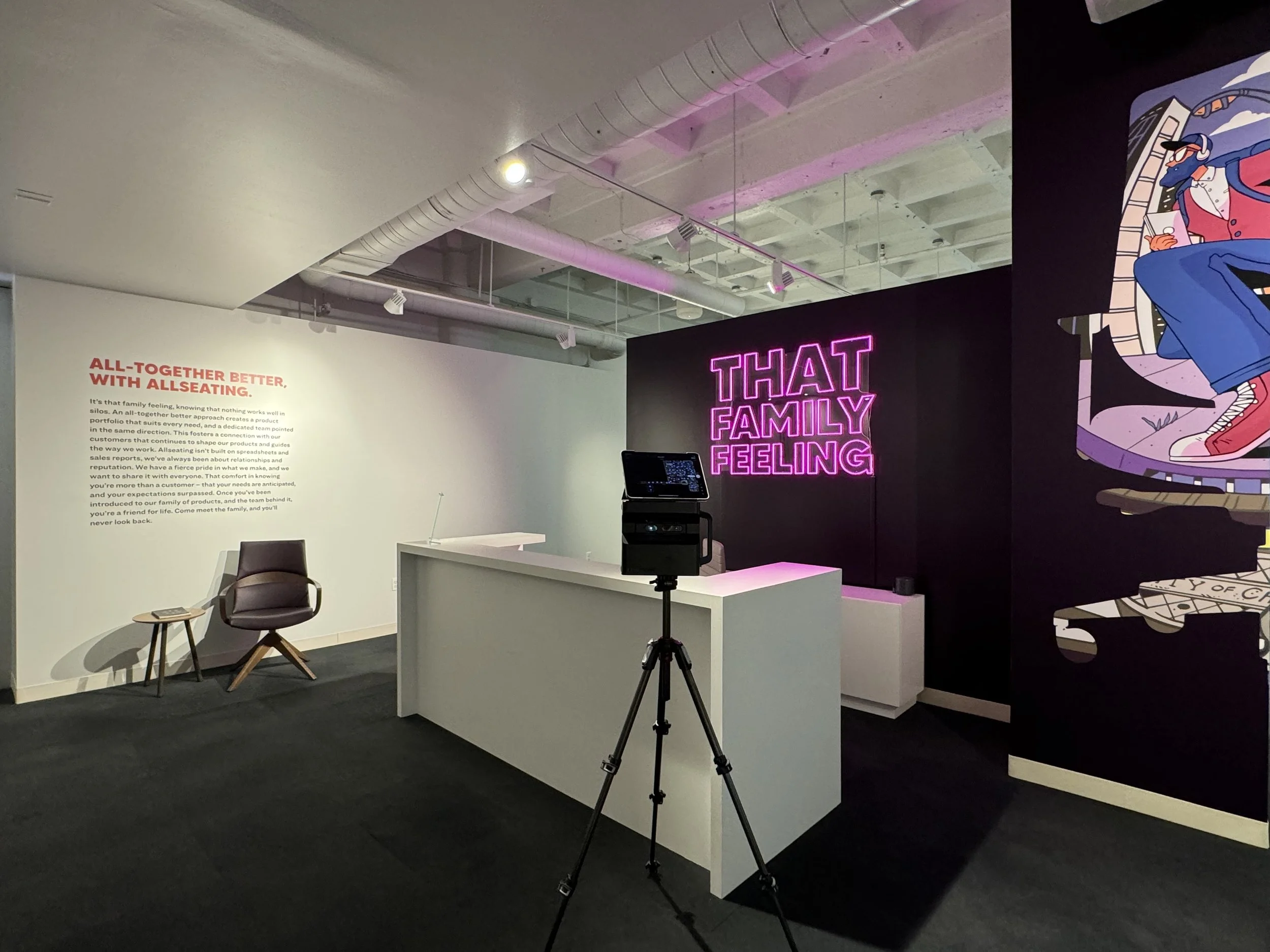
Revolutionizing Commercial Design Showrooms with 3D Virtual Tours
This year, we’re thrilled to participate in the NeoCon 2024 show in Chicago, supporting the commercial design industry with our augmented and virtual reality experiences. In this blog post, we’ll delve into the numerous benefits of 3D virtual tours and how they can elevate your showroom to new heights.
In the ever-evolving landscape of commercial furniture, staying ahead of the curve means embracing technology that enhances the buying experience and streamlines operations. At Lightbound 3D, we specialize in providing cutting-edge Matterport Real Estate and Virtual Tours. This year, we’re thrilled to participate in the NeoCon 2024 show in Chicago, supporting the commercial design industry with our augmented and virtual reality experiences. In this blog post, we’ll delve into the numerous benefits of 3D virtual tours and how they can elevate your showroom to new heights.
Enhanced Customer Engagement
One of the most significant advantages of 3D virtual tours is the unparalleled level of customer engagement they offer. Traditional showrooms require customers to physically visit the location, which can be a significant barrier. With 3D virtual tours, potential buyers can explore your showroom from the comfort of their homes or offices, at any time that suits them. This convenience translates to increased engagement, as customers can take their time to explore and make informed decisions.
Immersive Experience
A 3D virtual tour provides an immersive experience that photos and videos simply cannot match. Using advanced Matterport technology, we create a realistic, interactive 3D model of your showroom. Customers can “walk” through the space, zoom in on details, and even see products from different angles. This immersive experience helps customers visualize how the furniture will look and feel in their own spaces, bridging the gap between online browsing and in-person shopping.
Cost-Effective and Efficient
Setting up and maintaining a physical showroom can be costly and time-consuming. Rent, utilities, staffing, and maintenance all add up. A 3D virtual tour, on the other hand, is a one-time investment that can be used indefinitely. It allows you to showcase your products without the need for a large physical space, reducing overhead costs. Additionally, updates to the showroom can be made digitally, saving time and money.
Increased Reach
A physical showroom limits your reach to the local area, but a 3D virtual tour is accessible to anyone with an internet connection. This expanded reach means you can attract potential buyers from all over the world, increasing your customer base and potential sales. For businesses looking to expand into new markets, this is a game-changer.
Interactive Features
Our 3D virtual tours are not just about walking through a space; they include interactive features that enhance the customer experience. Embedded tags can provide detailed information about specific products, including dimensions, materials, and pricing. Customers can also view videos, read reviews, and even see how different pieces of furniture look together through virtual staging. These features provide a richer, more informative shopping experience.
Improved Sales and Marketing
A 3D virtual tour is a powerful sales and marketing tool. It can be easily integrated into your website, shared on social media, and included in email campaigns. Potential customers can explore your showroom at their convenience, which increases the likelihood of them making a purchase. Additionally, analytics from the virtual tour can provide valuable insights into customer behavior, helping you refine your marketing strategies and improve sales.
Time-Saving for Customers and Sales Teams
A 3D virtual tour saves time for both customers and sales teams. Customers can explore the showroom at their own pace, without the need to schedule appointments or travel. This is particularly beneficial for busy professionals or those located far from the showroom. For sales teams, virtual tours can pre-qualify leads by allowing customers to do their research beforehand, making in-person visits more productive.
Sustainability
In today’s eco-conscious world, sustainability is more important than ever. A 3D virtual tour reduces the need for physical travel, lowering your carbon footprint. It also minimizes the waste associated with maintaining and updating a physical showroom. By choosing a virtual showroom, you’re making an environmentally friendly choice that resonates with today’s consumers.
Supporting Furniture Manufacturers at NeoCon 2024
At Lightbound 3D, we’re excited to support furniture manufacturers at the 2024 NeoCon show in Chicago. NeoCon is the world’s leading platform for commercial design, where industry professionals gather to see the latest innovations. This year, we’re bringing our augmented and virtual reality experiences to the event, allowing attendees to immerse themselves in our 3D virtual tours.
By partnering with furniture manufacturers at NeoCon, we’re enabling them to showcase their products in an innovative and interactive way. Attendees will have the opportunity to explore virtual showrooms using VR headsets, providing a firsthand experience of the technology’s potential. We’ll also be demonstrating how our 3D virtual tours can be integrated with other technologies, such as augmented reality (AR) and Building Information Management (BIM), to create even more engaging and informative customer experiences.
Conclusion
The benefits of 3D virtual tours for commercial furniture showrooms are clear. From enhanced customer engagement and immersive experiences to cost savings and increased reach, this technology is revolutionizing the way we showcase and sell furniture. At Lightbound 3D, we’re at the forefront of this revolution, providing state-of-the-art virtual tours that transform the customer experience.
As we prepare for NeoCon 2024, we’re excited to share our innovations with the world and demonstrate how augmented and virtual reality can elevate your showroom to new heights. By supporting furniture manufacturers at the event, we’re helping them embrace the future of commercial furniture showrooms.
By leveraging 3D virtual tours, commercial furniture showrooms can not only stay competitive but also offer a superior shopping experience that meets the needs of today’s tech-savvy consumers. At Lightbound 3D, we’re committed to helping you achieve this transformation, ensuring your showroom stands out in a crowded market.