

How Virtual Tours Increase Efficiency in the Hospitality Industry
The hospitality industry is built on creating memorable experiences, from individual guest stays to large-scale events like weddings and corporate conferences. One of the most effective tools that have emerged to enhance efficiency and improve customer satisfaction in this sector is the use of virtual tours. By providing prospective guests and event planners with immersive, interactive views of rooms, venues, and facilities, virtual tours have revolutionized the booking process and streamlined event planning.
The hospitality industry is built on creating memorable experiences, from individual guest stays to large-scale events like weddings and corporate conferences. One of the most effective tools that have emerged to enhance efficiency and improve customer satisfaction in this sector is the use of virtual tours. By providing prospective guests and event planners with immersive, interactive views of rooms, venues, and facilities, virtual tours have revolutionized the booking process and streamlined event planning.
Transforming the Room Booking Process
In the digital age, guests expect convenience and transparency when booking a room at a hotel or resort. Static images and generic descriptions no longer suffice when potential customers are making their decisions. Virtual tours allow them to explore the property in a much more detailed and realistic way from the comfort of their homes or offices.
Guests can walk through a hotel’s lobby, explore different room types, and check out amenities like the gym, pool, and spa. This level of interaction provides clarity on room size, layout, and views, reducing uncertainty and increasing the likelihood of bookings. Virtual tours are especially beneficial for high-end hotels and resorts, where customers are looking for luxurious experiences and want to ensure that the room meets their expectations before making a significant financial commitment.
By giving customers the ability to "virtually visit" the property, hotels reduce the time spent answering detailed questions about rooms or services. This improves productivity by allowing sales teams to focus on handling more direct inquiries, finalizing bookings, or upselling premium services.
Enhancing Event Planning Efficiency
For event planners, organizing large gatherings like weddings, conferences, or corporate retreats often requires several visits to a venue. Traditionally, this has been a time-consuming process, with clients needing to walk through spaces, discuss setup options, and envision how the event will unfold in different areas of the property.
With virtual tours, event planners can get a comprehensive view of the venue without needing to visit in person. They can tour ballrooms, outdoor spaces, meeting rooms, and even kitchen facilities. This allows them to visualize event setups, plan seating arrangements, and assess the flow of foot traffic—all without being physically present.
Moreover, virtual tours often include measurement tools that help planners determine whether a particular space will suit their needs in terms of dimensions or capacity. This helps eliminate guesswork and minimizes the need for multiple site visits, speeding up the planning process and reducing the burden on the venue's staff.
Reducing Cancellations and Improving Customer Satisfaction
One of the biggest challenges for the hospitality industry is cancellations or dissatisfaction due to unmet expectations. Virtual tours significantly mitigate this risk. Because potential guests or event planners get a highly accurate view of the space, they are less likely to feel disappointed when they arrive in person.
This transparency also leads to higher customer satisfaction rates, as guests and planners know exactly what they are getting. By setting clear expectations upfront, hotels and event venues are better positioned to deliver a positive experience, leading to better reviews and increased repeat business.
Boosting Marketing and Sales Efforts
Virtual tours don’t just improve operational efficiency; they also serve as a powerful marketing tool. Properties that showcase their spaces through interactive tours tend to stand out from the competition. Prospective customers can engage with the property in a more meaningful way, leading to higher conversion rates and increased bookings.
By integrating virtual tours into websites, emails, and social media, hotels can reach a wider audience and generate more interest in their offerings. This, in turn, leads to more inquiries and ultimately, more bookings, all while saving time for sales and marketing teams.
Conclusion
In a highly competitive hospitality industry, efficiency is key to maintaining profitability and customer satisfaction. Virtual tours have proven to be a valuable tool, transforming the room booking process, streamlining event planning, and reducing cancellations. For hotels, resorts, and event venues, investing in virtual tour technology is not only a way to stay competitive but also a means of driving productivity and delivering a superior guest experience.

A Modern Approach to Training and Orientation
Virtual tours, once primarily associated with real estate and marketing, are now finding innovative applications in corporate settings. By incorporating virtual tours into the onboarding process, we can help companies reduce time and costs while also improving engagement. The benefits of virtual tours in onboarding are too significant to ignore, and we’re here to help businesses harness that potential.
In today's fast-paced business world, ensuring that new employees are onboarded effectively is crucial for long-term success. Traditional methods like in-person tours, handbooks, and presentations can often feel time-consuming, repetitive, and, at times, ineffective. At Lightbound 3D, we are transforming the employee onboarding experience by utilizing cutting-edge virtual tour technology, offering a dynamic and interactive approach to introducing new hires to their workplace, culture, and environment.
Virtual tours, once primarily associated with real estate and marketing, are now finding innovative applications in corporate settings. By incorporating virtual tours into the onboarding process, we can help companies reduce time and costs while also improving engagement. The benefits of virtual tours in onboarding are too significant to ignore, and we’re here to help businesses harness that potential.
Enhancing Employee Engagement with Virtual Tours
One of the biggest challenges in onboarding is ensuring that new hires feel connected and engaged from the very start. With our virtual tours, we offer a unique solution by immersing new employees in their workplace environment before they even step foot inside the building. They can explore the office layout, view common areas, and even "walk" through departments to understand where they’ll be working and with whom.
This immersive experience helps break down the barriers that often make the first day overwhelming. New hires can familiarize themselves with the company's physical space and culture at their own pace, reducing anxiety and allowing them to focus more on the core aspects of their role. At Lightbound 3D, our virtual tours give companies the ability to create highly interactive and detailed onboarding experiences, helping employees feel comfortable and engaged from day one.
Reducing Onboarding Time and Costs
One of the most practical advantages of virtual tours is the time and cost savings they provide. Traditional onboarding processes often require HR staff or team leaders to conduct time-consuming in-person tours and orientations. By leveraging our virtual tours, companies can streamline this process, allowing new hires to explore the workplace remotely at any time.
This flexibility is especially beneficial for larger organizations or companies with multiple locations. New employees can virtually "visit" multiple offices or departments without the need for expensive travel or logistics coordination. In industries like healthcare, retail, or manufacturing, where employees may need to understand complex layouts or safety protocols, our virtual tours offer an efficient, scalable solution.
Application Across Multiple Industries
The potential for using virtual tours in onboarding extends across various industries. For instance, in healthcare, new employees can explore hospital layouts, familiarize themselves with important safety zones, and even practice navigating critical areas before their first shift. In retail, new hires can virtually tour store layouts and learn key operational details. For manufacturing and construction, our virtual tours can be used to demonstrate workplace safety protocols, equipment handling, and more.
No matter the industry, our virtual tours are customizable to meet specific company needs. This adaptability ensures that each new employee has a tailored onboarding experience that not only familiarizes them with their role but also creates a sense of belonging.
Looking to the Future: AR Integration
As virtual tours continue to evolve, we’re excited about the potential of integrating augmented reality (AR) into the onboarding process. This technology will allow new hires to interact with objects, processes, or even colleagues in real-time, creating a more immersive and hands-on learning environment.
Imagine a new employee virtually touring their workplace while receiving real-time guidance through AR about specific tools or processes relevant to their job. This type of onboarding can provide even more value by offering experiential learning opportunities that can dramatically improve retention and understanding.
Conclusion
At Lightbound 3D, we believe that the future of employee onboarding lies in the power of virtual tours and immersive technology. By offering an engaging, cost-effective, and flexible way to welcome new employees, virtual tours are revolutionizing how companies introduce their team members to their workspaces. If you’re looking to elevate your onboarding process, it’s time to consider how virtual tours can play a role in creating a more connected and prepared workforce.

5 Ways Virtual Tours Can Transform Your E-Commerce Site
Virtual tours are no longer just for the real estate industry—they are quickly becoming a powerful tool for e-commerce businesses looking to elevate their online shopping experience. By engaging customers, improving product visualization, building trust, telling compelling stories, and driving higher conversion rates, virtual tours can truly transform your e-commerce site. As this technology continues to evolve, adopting it early will give your business a competitive edge and set you apart as a leader in the future of online retail.
In today’s fast-paced digital world, e-commerce businesses are constantly looking for ways to stand out from the competition and offer an engaging shopping experience. While static product images and descriptions have been the norm for years, innovative companies are embracing a new trend that takes online shopping to a whole new level—virtual tours. These immersive experiences can provide online shoppers with a more dynamic, interactive way to explore products and spaces. Here are five ways virtual tours can transform your e-commerce site:
1. Enhanced Customer Engagement
Virtual tours offer an interactive experience that captures customers’ attention far more effectively than static images. Instead of scrolling through dozens of photos, users can navigate a 360-degree environment, zoom in on products, and view them from different angles. This increased level of interactivity keeps customers engaged longer, reducing bounce rates and encouraging more time spent on your site. The longer a customer stays, the more likely they are to make a purchase.
2. Improved Product Visualization
One of the biggest challenges of e-commerce is bridging the gap between seeing and experiencing a product. Virtual tours allow customers to visualize products in real-world environments, whether it’s furniture in a living room, clothing in a styled wardrobe, or electronics in a home office. This ability to experience how products fit into their lives makes it easier for customers to make informed purchasing decisions. The detailed, immersive visuals leave little room for doubt, ultimately reducing return rates and increasing customer satisfaction.
3. Increased Customer Trust and Transparency
Virtual tours can build a greater sense of trust with your customers by providing full transparency about the products and spaces you’re selling. For example, real estate websites have long used virtual tours to showcase properties, allowing potential buyers or renters to explore the space in great detail. The same concept applies to e-commerce: by offering a virtual tour of a product showroom, factory, or warehouse, you demonstrate openness and transparency, which helps to build customer trust.
4. Better Storytelling Opportunities
Consumers today are drawn to brands that tell a compelling story. Virtual tours allow you to craft immersive narratives that showcase your brand’s history, values, or product development process in a creative, engaging way. Imagine guiding your customers through a behind-the-scenes virtual tour of your design studio, production facility, or flagship store. This kind of experience not only promotes your products but also connects customers with your brand on a deeper level, fostering loyalty and emotional engagement.
5. Higher Conversion Rates
All of the benefits mentioned above—enhanced engagement, better product visualization, increased trust, and improved storytelling—lead to one ultimate goal: higher conversion rates. Customers who feel more confident and connected to a product are far more likely to complete a purchase. In fact, businesses that have implemented virtual tours have reported increased sales as a direct result of the immersive experience they provide. By giving your customers a unique, interactive way to explore your offerings, you reduce uncertainty and create a shopping experience that rivals in-store visits.
Conclusion
Virtual tours are no longer just for the real estate industry—they are quickly becoming a powerful tool for e-commerce businesses looking to elevate their online shopping experience. By engaging customers, improving product visualization, building trust, telling compelling stories, and driving higher conversion rates, virtual tours can truly transform your e-commerce site. As this technology continues to evolve, adopting it early will give your business a competitive edge and set you apart as a leader in the future of online retail.
At Lightbound 3D, we specialize in creating immersive virtual tours that can take your e-commerce platform to the next level. With extensive experience in producing interactive, 3D virtual experiences across multiple industries, we know how to tailor our solutions to your specific needs. Whether you’re looking to showcase products in a virtual showroom or enhance customer engagement with interactive environments, we’re here to help. Ready to transform your e-commerce experience? Contact Lightbound 3D today and let’s discuss how we can bring your products to life with cutting-edge virtual tours.

Laser Measurement of the Elevator Shafts at Queens Quay Terminal
At Lightbound 3D, we’re always excited to work on projects that blend history, innovation, and technology. Our recent endeavor at the iconic Queens Quay Terminal in Toronto was no exception. This project allowed us to showcase the power of advanced laser measurement techniques in documenting complex architectural structures, specifically the elevator shafts of this historic building.
At Lightbound 3D, we’re always excited to work on projects that blend history, innovation, and technology. Our recent endeavor at the iconic Queens Quay Terminal in Toronto was no exception. This project allowed us to showcase the power of advanced laser measurement techniques in documenting complex architectural structures, specifically the elevator shafts of this historic building.
The Historical Significance of Queens Quay Terminal
Queens Quay Terminal, a landmark on Toronto’s waterfront, is not just a building; it's a piece of the city’s rich history. Originally constructed in the 1920s as a warehouse for the Toronto Harbour Commission, the building was transformed in the early 1980s into a mixed-use space that includes residential, commercial, and retail areas. The renovation preserved the building’s historical façade while introducing modern amenities, making it a unique blend of old and new.
The elevator shafts at Queens Quay Terminal are integral to the building's function, serving both residents and visitors. Given the building’s age and the complexity of its layout, capturing precise measurements of these shafts was crucial for future renovations and maintenance.
The Challenge: Documenting Complex Spaces
The project at Queens Quay Terminal presented several challenges that required meticulous planning and execution. The elevator shafts, being narrow, vertically extensive, and intricate in design, demanded a high level of accuracy in measurement. Traditional measurement methods would have been time-consuming and potentially inaccurate due to the shafts' depth and the building's complex architecture.
Our team at Lightbound 3D knew that laser measurement technology was the ideal solution for this project. We chose to utilize our advanced laser scanning equipment to capture every detail of the elevator shafts, ensuring that the data collected would be precise and comprehensive.
The Process: Harnessing Laser Measurement Technology
Laser scanning is a powerful tool in the world of building documentation, offering unparalleled accuracy and speed. For the Queens Quay Terminal project, we deployed a high-resolution laser scanner capable of capturing millions of data points per second. This technology allowed us to create a detailed point cloud of the elevator shafts, capturing even the most minute details.
The process began with a thorough survey of the building’s layout, ensuring that we could access all necessary points for scanning. Our team then strategically placed the scanner at various levels within the elevator shafts to capture the full depth and complexity of the space. Each scan was meticulously planned to ensure there was no overlap or data loss, resulting in a complete and accurate representation of the shafts.
Once the scanning was complete, we processed the data to create a 3D model of the elevator shafts. This model is not just a static image; it’s a dynamic tool that can be used for a variety of purposes, from planning future renovations to conducting structural analyses. The model can be viewed from any angle, allowing stakeholders to examine the shafts in unprecedented detail.
The Outcome: A Foundation for Future Projects
The success of the laser measurement project at Queens Quay Terminal is a testament to the capabilities of modern technology in preserving and enhancing historic structures. The data we captured will serve as a valuable resource for architects, engineers, and building managers as they plan future renovations and ensure the building's longevity.
For Lightbound 3D, this project was more than just another job—it was an opportunity to contribute to the preservation of one of Toronto’s most beloved landmarks. By using cutting-edge laser measurement technology, we were able to document the elevator shafts with a level of precision that will support the building’s upkeep for years to come.
As Toronto continues to grow and evolve, projects like this remind us of the importance of balancing innovation with preservation. At Lightbound 3D, we’re proud to be at the forefront of this effort, using technology to bridge the past and the future.
Whether it’s capturing the intricate details of an elevator shaft or documenting the full scope of a building, we’re committed to delivering accurate, high-quality results that stand the test of time. The Queens Quay Terminal project is just one example of how we’re making a difference, one scan at a time.

Lightbound 3D On Location at King and Spadina: Facade preservation with Laser Precision!
At Lightbound 3D, we are committed to using the latest technology to support construction and preservation projects across Toronto and beyond. Our work at King and Spadina is a testament to our dedication to accuracy, efficiency, and the seamless integration of new and old.
Introduction
At Lightbound 3D, we take pride in being at the forefront of advanced measurement and documentation technologies. Our latest project takes us to the bustling intersection of King and Spadina in downtown Toronto, where we are providing essential laser measurements for building shoring and architectural facade preservation at a new construction site.
The Project: Building Shoring and Facade Preservation
Building shoring and facade preservation are critical components of construction, particularly in urban environments where maintaining the structural integrity and historical value of existing buildings is paramount. Our work at this site involves:

Laser scanning and drone application to document building shoring.
Building Shoring: Ensuring that the surrounding structures are adequately supported during the excavation and construction phases.
Facade Preservation: Accurately capturing the details of the existing architectural facade to ensure it is preserved and seamlessly integrated into the new construction.
Why Laser Measurements?
Laser measurement technology offers unparalleled precision and efficiency, making it the ideal choice for complex construction projects. Here’s why:
Accuracy: Laser scanners provide highly accurate measurements, capturing minute details that are crucial for both shoring and facade preservation.
Speed: Traditional measurement methods can be time-consuming. Laser scanning dramatically reduces the time required, allowing us to deliver results faster.
Comprehensive Data: The 3D models generated from laser scans offer a comprehensive view of the site, enabling better planning and execution.
Our Process
Our process involves several key steps to ensure the highest quality results:
Initial Survey: We begin with an on-site survey to understand the specific requirements and challenges of the project.
Laser Scanning: Using state-of-the-art laser scanners, we capture detailed measurements of the building facade and the surrounding structures.
Data Processing: The data collected is processed to create accurate 3D models and detailed reports.
Integration and Planning: These models are then used to plan the shoring process and to preserve the architectural integrity of the facade.
On-Site at King and Spadina
The King and Spadina site is a hive of activity, with construction teams, heavy machinery, and our team of experts working in tandem to ensure the project’s success. Here’s a glimpse of what we’ve been up to:
Setup: Our team arrives early to set up the laser scanning equipment and conduct preliminary assessments.
Scanning: Throughout the day, we perform multiple scans from different angles to capture every detail of the facade and surrounding structures.
Collaboration: We work closely with the construction team, sharing our findings in real-time to address any immediate concerns and to adjust plans as needed.
The Impact
Our work at this site is not just about preserving a building; it's about maintaining a piece of Toronto's architectural heritage while supporting modern development. By using advanced laser measurement technology, we are able to provide precise data that ensures both safety and historical accuracy.
Conclusion
At Lightbound 3D, we are committed to using the latest technology to support construction and preservation projects across Toronto and beyond. Our work at King and Spadina is a testament to our dedication to accuracy, efficiency, and the seamless integration of new and old. Stay tuned for more updates on this exciting project and other initiatives where we continue to push the boundaries of what’s possible in building measurement and preservation.

Powering Through Summer Storms: How 3D Laser Scanning Keeps Toronto's Lights On
Our on-site data collection process is fast, thorough, and accurate, ensuring cost efficiency for various properties and existing infrastructures. Utilizing advanced 3D laser scanning services, we surpass traditional surveying methods with LiDAR technology (Light Detection and Ranging), enabling us to measure and record precise locations accurately.
A reliable electricity supply is the backbone of daily life and economic activity. Ensuring that the city’s power infrastructure remains robust and efficient is a top priority for local hydro utilities, especially during the summer when unpredictable inclement rain storms can threaten the stability of the grid. At Lightbound 3D, we are proud to play a pivotal role in this mission through our advanced 3D laser scanning services. Here’s how our cutting-edge technology is helping Toronto’s hydro utilities keep their equipment in optimal condition, ensuring uninterrupted power for all.
Precision and Efficiency in Infrastructure Maintenance
Maintaining the extensive network of power lines, substations, and other critical infrastructure requires precision and efficiency. Traditional surveying methods can be time-consuming and often lack the detailed accuracy needed for complex utility projects. Our 3D laser scanning services offer a superior alternative. By utilizing state-of-the-art LiDAR technology (Light Detection and Ranging), we provide hydro utilities with highly accurate, real-time data that is crucial for effective maintenance and planning, especially when anticipating the challenges posed by summer storms.
Comprehensive Data Collection

Our process begins with comprehensive on-site data collection. The 3D laser scanners capture millions of data points per second, creating a precise digital representation of the utility’s infrastructure. This detailed point cloud data includes every nook and cranny of the equipment, from the towering power lines to the intricate components of substations. This level of detail ensures that no aspect of the infrastructure is overlooked, allowing for thorough assessments and proactive maintenance to brace for storm impacts.
Enhanced Planning and Problem Solving
With accurate 3D models at their disposal, hydro utilities can better plan maintenance schedules and respond to issues before they escalate. The detailed data supports the creation of precise CAD models and BIM (Building Information Modeling) processes, which are invaluable for project planning and execution. Engineers can simulate various scenarios, identify potential problem areas, and devise effective solutions, all within a virtual environment. This proactive approach minimizes downtime and enhances the overall reliability of the electricity supply, particularly during unpredictable weather events.
Cost Efficiency and Safety
Accurate data not only improves operational efficiency but also translates to significant cost savings. By identifying issues early and planning maintenance activities precisely, utilities can avoid costly emergency repairs and reduce the risk of unexpected outages. Additionally, our 3D laser scanning services enhance safety for utility workers. By using digital models for planning, engineers can minimize the need for physical inspections in hazardous areas, thereby reducing the risk of accidents during storm preparations and responses.
Supporting Sustainable Infrastructure
As Toronto continues to grow, the demand for reliable electricity will only increase. Our 3D laser scanning services support the sustainable development of the city’s power infrastructure. By ensuring that existing equipment is maintained effectively and new installations are planned with precision, we help hydro utilities meet current and future energy needs efficiently and sustainably, even in the face of summer storms.
Conclusion
At Lightbound 3D, we are committed to leveraging advanced technology to support essential services in our community. Our 3D laser scanning services are a vital tool for Toronto’s hydro utilities, providing the precision and efficiency needed to keep the city powered, rain or shine. Through comprehensive data collection, enhanced planning, and cost-efficient maintenance, we help ensure that Toronto’s electricity supply remains reliable, now and in the future.
For more information on how our services can benefit your infrastructure projects, contact us today. Together, we can build a brighter, more reliable future for Toronto.
Transforming Spaces with Virtual Staging: From Cluttered to Chic
In the world of real estate and interior design, first impressions are everything. The way a space is presented can significantly impact its perceived value and appeal. At Lightbound 3D, we specialize in using advanced technologies to bring out the best in every property. One of our most effective tools is virtual staging, a process that transforms cluttered, empty, or outdated spaces into beautifully styled environments.
Introduction
In the world of real estate and interior design, first impressions are everything. The way a space is presented can significantly impact its perceived value and appeal. At Lightbound 3D, we specialize in using advanced technologies to bring out the best in every property. One of our most effective tools is virtual staging, a process that transforms cluttered, empty, or outdated spaces into beautifully styled environments. In this blog post, we'll dive deep into the power of virtual staging, showcasing its benefits, the process involved, and how it can elevate any property. We'll also take a detailed look at some before-and-after examples to illustrate just how transformative virtual staging can be.
The Power of First Impressions
When potential buyers or renters walk into a property, their first impression can set the tone for their entire experience. A well-staged home can evoke feelings of warmth, comfort, and aspiration, making it easier for viewers to envision themselves living in the space. Conversely, a cluttered or empty room can feel cold and uninviting, making it harder for viewers to connect with the property.
Virtual staging bridges this gap by providing a realistic, visually appealing representation of what a space could look like when furnished and decorated. Unlike traditional staging, which can be time-consuming and expensive, virtual staging is efficient, cost-effective, and highly customizable.
What is Virtual Staging?
Virtual staging is the process of using digital technology to furnish and decorate a property. It involves creating realistic, computer-generated images of furniture, décor, and other elements to enhance the appearance of a room. This technique allows for a high degree of flexibility, enabling designers to experiment with different styles, layouts, and color schemes without the need for physical furniture.
At Lightbound 3D, we leverage the latest in 3D modeling and rendering software to produce stunningly realistic virtual staging. Our team of skilled designers works closely with clients to understand their vision and bring it to life through digital transformation.
Benefits of Virtual Staging
1. Cost-Effectiveness
Traditional staging can be expensive, requiring the rental or purchase of furniture, décor, and other elements. Additionally, there's the cost of hiring a professional stager to arrange everything. Virtual staging eliminates these costs, providing a more affordable solution that doesn't compromise on quality.
2. Flexibility
With virtual staging, the possibilities are endless. Designers can easily experiment with different styles, layouts, and color schemes to find the perfect look for a property. This flexibility allows for quick adjustments and refinements, ensuring the final result is exactly what the client envisions.
3. Time Efficiency
Traditional staging can take days or even weeks to complete, depending on the scope of the project. Virtual staging, on the other hand, can be completed in a fraction of the time. This speed is particularly beneficial in the fast-paced real estate market, where properties need to be listed and shown quickly.
4. Realistic and High-Quality Visuals
Modern virtual staging technology allows for incredibly realistic and high-quality visuals. At Lightbound 3D, we use advanced 3D rendering techniques to create images that are virtually indistinguishable from real photographs. This level of realism helps potential buyers or renters better understand the potential of a space.
5. Customization
Virtual staging offers a level of customization that traditional staging can't match. Designers can tailor every element of the staging to suit the target audience, whether it's modern, traditional, minimalist, or eclectic. This customization ensures that the staging resonates with the specific tastes and preferences of potential buyers or renters.
The Virtual Staging Process
The virtual staging process at Lightbound 3D involves several key steps:
1. Initial Consultation
The process begins with an initial consultation to understand the client's vision and goals. During this stage, we discuss the desired style, layout, and any specific elements the client wants to include. We also gather information about the property, including floor plans and photographs.
2. Digital Modeling
Next, our team of designers creates a digital model of the property using advanced 3D modeling software. This model serves as the foundation for the virtual staging process.
3. Furnishing and Decorating
Once the digital model is complete, we begin the process of furnishing and decorating the space. Using high-quality 3D assets, we add furniture, décor, and other elements to create a visually appealing and cohesive look. We pay close attention to details such as lighting, shadows, and textures to ensure the final images are as realistic as possible.
4. Review and Refinement
After the initial staging is complete, we present the images to the client for review. This stage allows for feedback and refinements to ensure the final result aligns with the client's vision. We make any necessary adjustments to the staging based on the client's input.
5. Final Delivery
Once the staging is finalized, we deliver the high-resolution images to the client. These images can be used for marketing materials, online listings, and other promotional efforts.
Before and After: A Closer Look
To illustrate the transformative power of virtual staging, let's take a closer look at some before-and-after examples from our recent projects.
Example 1: From Cluttered to Chic
In this first example, we transformed a cluttered living space into a stylish and inviting environment. The before image shows a room filled with personal belongings, cluttered surfaces, and an overall lack of cohesion. This setup makes it difficult for potential buyers to see the room's potential.
Before:

The after image, on the other hand, showcases a beautifully staged living area with modern furniture, coordinated décor, and a clean, organized layout. The transformation highlights the room's best features and creates a welcoming atmosphere.
After:

Example 2: Hallway Transformation
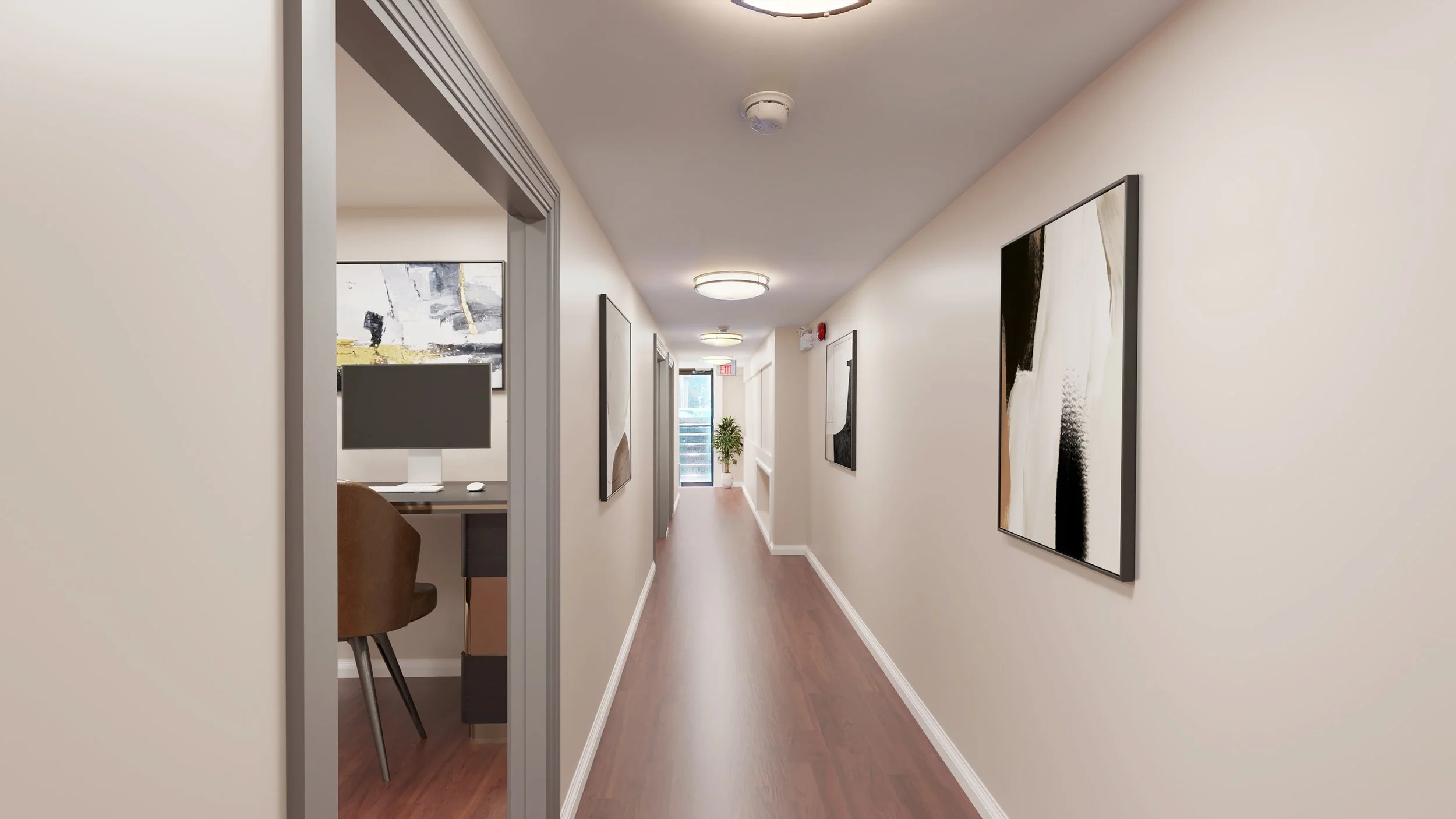
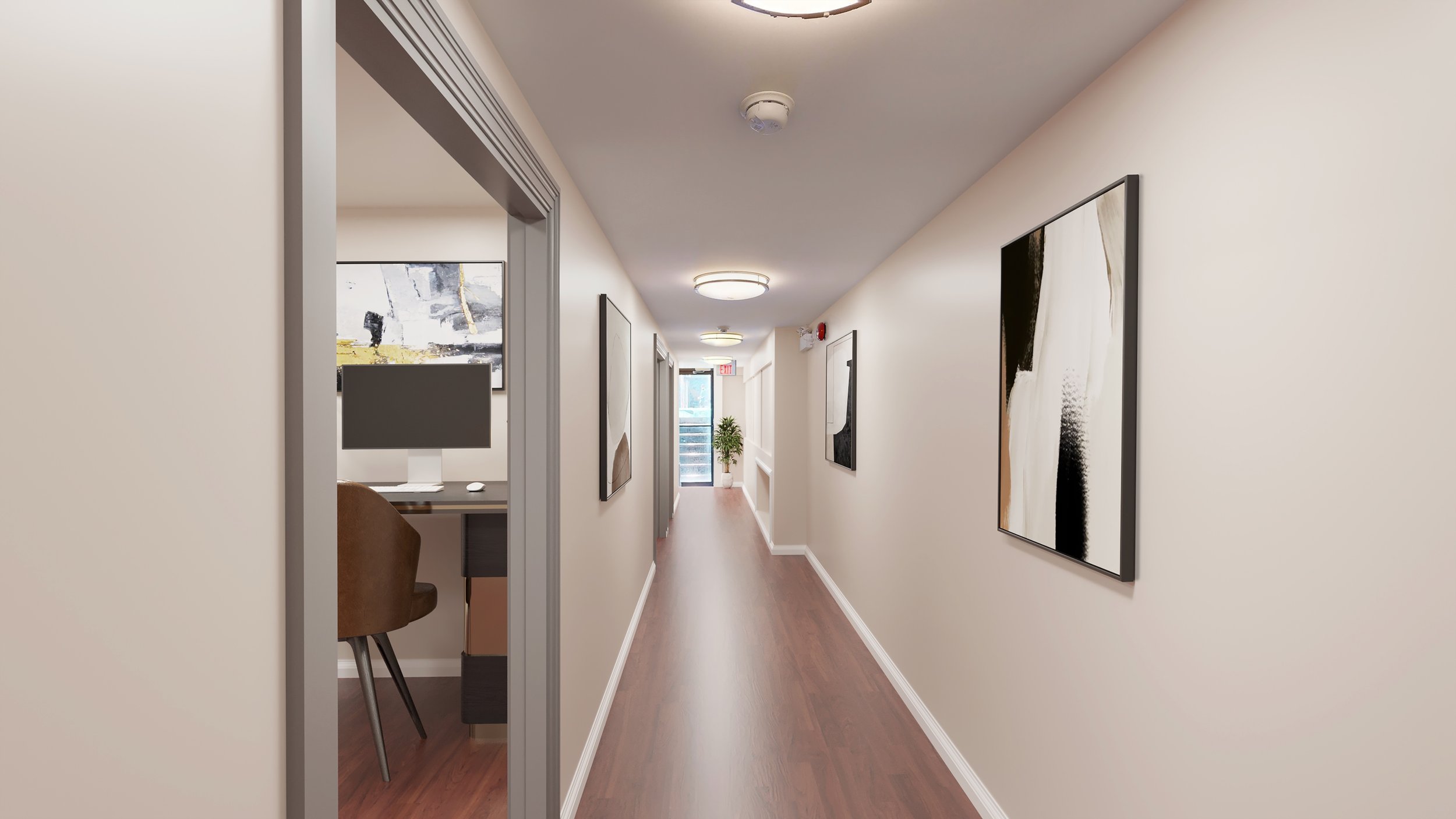
In this second example, we tackled a narrow, cluttered hallway. The before image shows a space filled with miscellaneous items, creating a sense of disorganization and making the hallway appear cramped.
Before:

The after image reveals a sleek, clean hallway with minimalistic décor and strategic lighting. The transformation not only improves the hallway's aesthetic appeal but also makes it feel more spacious and inviting.
After:
The Impact on Real Estate Sales
Virtual staging isn't just about making a property look good; it's about driving real results in the real estate market. Studies have shown that staged homes sell faster and for higher prices than their unstaged counterparts. By providing potential buyers with a clear vision of what a space can look like, virtual staging helps them form an emotional connection with the property.
Faster Sales
Properties that are virtually staged tend to spend less time on the market. This speed is particularly valuable in competitive markets where time is of the essence. Buyers are more likely to make quick decisions when they can easily envision themselves living in a beautifully staged home.
Higher Offers
Virtual staging can also lead to higher offers. When a property is presented in its best light, it creates a sense of value and desirability. Buyers are often willing to pay more for a home that feels move-in ready and aesthetically pleasing.
Broader Appeal
Virtual staging allows for customization that can cater to a broad range of tastes and preferences. This broad appeal increases the likelihood of attracting multiple offers, creating a competitive environment that can drive up the final sale price.
Conclusion
Virtual staging is a powerful tool that can transform any property into a stunning, market-ready space. At Lightbound 3D, we are dedicated to helping our clients showcase their properties in the best possible light. Through our advanced virtual staging techniques, we create realistic, high-quality images that highlight the true potential of every room.
Whether you're a real estate agent looking to sell a property quickly, a homeowner wanting to present your space in the best way, or a developer aiming to market new construction, virtual staging offers a cost-effective, flexible, and impactful solution. The examples we've shared demonstrate just how transformative virtual staging can be, turning cluttered and uninviting spaces into stylish and desirable environments.
If you're interested in learning more about our virtual staging services or seeing additional examples of our work, please visit our website or contact us directly. Let us help you make a lasting impression and achieve your real estate goals with the power of virtual staging.
Call to Action
Ready to transform your property with virtual staging? Contact Lightbound 3D today to schedule a consultation and discover how our services can elevate your space. Visit our website at www.lightbound3d.com/virtual-staging-made-easy or call us at (437) 775-9000. Follow us on social media for more before-and-after transformations and design inspiration!

The Art and Science of 3D Scanning in Building Construction: Documenting Radiant Floor Heating
Building a house is a multifaceted project, one that integrates numerous elements to create a cohesive and functional living space. One crucial phase in this complex process is the installation of radiant floor heating. At Lightbound 3D, we leverage cutting-edge 3D scanning technology to meticulously document this stage, ensuring that every detail is captured accurately before the permanent top floor is installed. This documentation is vital not only for quality assurance but also for future reference and peace of mind for homeowners and builders alike.
Building a house is a multifaceted project, one that integrates numerous elements to create a cohesive and functional living space. One crucial phase in this complex process is the installation of radiant floor heating. At Lightbound 3D, we leverage cutting-edge 3D scanning technology to meticulously document this stage, ensuring that every detail is captured accurately before the permanent top floor is installed. This documentation is vital not only for quality assurance but also for future reference and peace of mind for homeowners and builders alike.
Understanding Radiant Floor Heating
Before delving into the specifics of how we document radiant floor heating, it’s essential to understand what it is and why it's an integral part of modern homebuilding.
What is Radiant Floor Heating?
Radiant floor heating is an energy-efficient system that warms a house by conducting heat through the floor. Unlike traditional heating systems that use air ducts, radiant floor heating relies on a network of pipes or electrical wiring installed beneath the floor surface. These pipes or wires heat the floor, which in turn radiates warmth upwards, providing even and comfortable heating throughout the home.
There are two main types of radiant floor heating systems:
Hydronic Systems: These systems use heated water that circulates through a network of pipes laid out under the floor. Hydronic systems are highly efficient and are commonly used in new construction projects.

Electric Systems: These systems use electric cables or mats installed under the floor. Electric systems are typically easier to install and are often used in renovations or smaller spaces.

Benefits of Radiant Floor Heating
Radiant floor heating offers several advantages over traditional heating methods, making it a popular choice for modern homes:
Even Heating: The heat rises evenly from the floor, eliminating cold spots and providing consistent warmth.
Energy Efficiency: Radiant floor heating can be more energy-efficient than forced-air systems, as it requires lower temperatures to achieve the same level of comfort.
Improved Air Quality: Unlike forced-air systems, radiant heating doesn’t circulate dust and allergens, contributing to better indoor air quality.
Comfort: The warmth from the floor makes the living space more comfortable, especially during the colder months.
The Importance of Documenting the Installation Phase
Documenting the installation of radiant floor heating is a critical step in the construction process. This documentation serves several essential purposes:
Quality Assurance
Ensuring that the radiant floor heating system is installed correctly is paramount. Any mistakes during the installation can lead to inefficient heating, higher energy bills, or even system failures. By documenting the installation with 3D scanning, we can verify that everything is in the right place and functioning as intended.
Future Reference
The detailed digital record created through 3D scanning provides a precise map of the heating system’s layout. This record is invaluable for future renovations, repairs, or maintenance. For instance, if a homeowner decides to remodel or add to their home, knowing the exact location of the heating pipes can prevent costly mistakes and damage to the system.
Peace of Mind
Homeowners and builders gain confidence knowing that the heating system has been meticulously documented and verified. This peace of mind is invaluable, as it assures them that the system will perform efficiently and reliably for years to come.
How Lightbound 3D Documents Radiant Floor Heating Installation
At Lightbound 3D, we utilize state-of-the-art 3D scanning technology to capture every detail of the radiant floor heating installation. This process involves several steps to ensure that the final digital model is accurate and comprehensive.
Step 1: Preparation
Before the scanning process begins, our team collaborates closely with the builders to ensure that the site is ready. This preparation includes:
Coordination: We coordinate with the construction team to schedule the scanning at the optimal time, usually right after the radiant floor heating system has been installed but before the permanent top floor is placed.
Site Inspection: Our team conducts a thorough inspection of the site to identify any potential obstacles or challenges that might affect the scanning process.
Equipment Setup: We set up our 3D scanning equipment, ensuring that all devices are calibrated and ready to capture the necessary data.
Step 2: Scanning
The actual scanning process involves using high-precision 3D scanners to capture the layout of the radiant heating pipes. Here’s how it works:
Data Capture: Our 3D scanners emit laser beams that bounce off the surfaces they encounter. The scanner records the time it takes for the laser beams to return, creating a detailed map of the area being scanned.
High Resolution: The scanners capture data at a high resolution, ensuring that even the smallest details of the heating system are recorded. This level of detail is crucial for creating an accurate digital model.
Comprehensive Coverage: We ensure that the entire area where the heating system is installed is scanned, capturing every inch of the pipes and their layout.
Step 3: Data Processing
Once the scanning is complete, the captured data is processed to create a detailed digital model. This step involves:
Data Cleaning: The raw data from the scanners is cleaned to remove any noise or irrelevant information. This ensures that the final model is clear and accurate.
Model Creation: Using specialized software, the cleaned data is used to create a 3D model of the radiant floor heating system. This model includes every detail of the pipes’ layout, their connections, and their placement relative to other structural elements.
Verification: The digital model is carefully reviewed to ensure its accuracy. Any discrepancies or issues identified during this review are addressed before the final model is completed.
Step 4: Documentation and Delivery
The final step involves documenting the 3D model and delivering it to the builders and homeowners. This documentation includes:
Digital Files: The 3D model is provided in digital formats that can be easily viewed on computers or mobile devices. This makes it accessible and convenient for future reference.
Detailed Reports: We also provide detailed reports that explain the layout of the heating system, including measurements and any relevant notes from the scanning process.
Support: Our team is available to support builders and homeowners in understanding and using the 3D model. We can answer questions, provide additional details, or assist with any related needs.
The Benefits of 3D Scanning for Radiant Floor Heating
Using 3D scanning to document the installation of radiant floor heating offers several significant benefits. These advantages underscore the value of this technology in modern construction:
Accuracy
3D scanning provides a level of accuracy that is unmatched by traditional documentation methods. The high-resolution data captured by our scanners ensures that every detail of the heating system is recorded with precision. This accuracy is critical for verifying the installation and for future reference.
Efficiency
The scanning process is quick and non-invasive, minimizing disruptions to the construction schedule. This efficiency allows builders to stay on track and ensures that the project progresses smoothly. Additionally, the detailed digital model can be created and delivered promptly, providing timely insights and documentation.
Transparency
The detailed 3D model offers a transparent view of the heating system’s installation. Homeowners and builders can see exactly how the pipes are laid out, understand their connections, and gain insights into the system’s design. This transparency builds trust and confidence, as all parties have a clear understanding of the installation.
Long-Term Value
The digital record created through 3D scanning provides long-term value. Homeowners can use the model for future renovations or repairs, avoiding costly mistakes and ensuring that the heating system remains intact. Builders can also reference the model for future projects, leveraging the insights gained from the initial installation.
Real-World Applications and Case Studies
To illustrate the impact of 3D scanning in documenting radiant floor heating installations, let’s explore a few real-world applications and case studies. These examples highlight how our technology has been used to enhance construction projects and provide valuable insights to homeowners and builders.
Case Study 1: Residential Home in Toronto
In a residential project in Toronto, the builders were tasked with installing a hydronic radiant floor heating system in a newly constructed home. The homeowners wanted to ensure that the system was installed correctly and would provide efficient heating throughout the house.
Our Involvement:
Preparation and Coordination: We coordinated with the builders to schedule the scanning immediately after the heating pipes were installed. Our team conducted a site inspection and set up the scanning equipment.
Scanning Process: Using our high-precision 3D scanners, we captured detailed data of the entire heating system layout. The scanning process took a few hours and covered all areas where the pipes were installed.
Data Processing: The captured data was processed to create a comprehensive 3D model of the heating system. We cleaned the data, created the model, and reviewed it for accuracy.
Documentation: The final 3D model was delivered to the builders and homeowners, along with detailed reports and support for understanding the model.
Outcomes:
Quality Assurance: The builders were able to verify that the heating system was installed correctly, ensuring optimal performance.
Future Reference: The homeowners received a detailed digital record of the heating system, which they could reference for future renovations or repairs.
Peace of Mind: Both the builders and homeowners gained confidence knowing that the system was documented accurately and would provide reliable heating.
Case Study 2: Commercial Building in Ottawa
In a commercial building project in Ottawa, the construction team was installing an electric radiant floor heating system in a large office space. The project required precise documentation to ensure that the heating system would meet the building’s energy efficiency goals and provide consistent comfort to occupants.
Our Involvement:
Preparation and Coordination: We worked with the construction team to plan the scanning process, ensuring that it would fit into the project timeline. Our team inspected the site and prepared the equipment.
Scanning Process: The 3D scanning covered the entire office space, capturing the layout of the electric heating cables. The process was efficient and minimally disruptive to the ongoing construction work.
Data Processing: We processed the captured data to create a detailed 3D model of the heating system. The model included precise measurements and a clear layout of the cables.
Documentation: The final model and detailed reports were provided to the construction team and building owners. We also offered support to help them understand and utilize the model.
Outcomes:
Energy Efficiency: The construction team used the 3D model to verify the heating system’s layout, ensuring it met the building’s energy efficiency goals.
Transparency: The building owners had a clear understanding of the heating system’s installation, which built trust and confidence in the project.
Long-Term Value: The detailed digital record provided long-term value, offering a reference for future maintenance or upgrades.
The Future of 3D Scanning in Construction
As technology continues to evolve, the use of 3D scanning in construction is poised to become even more integral. The benefits of accuracy, efficiency, transparency, and long-term value make 3D scanning an invaluable tool for documenting critical phases of building projects.
Innovations and Advancements
Several innovations and advancements are shaping the future of 3D scanning in construction:
Enhanced Scanning Technology: New advancements in scanning technology are improving the accuracy and resolution of 3D models. This enables even more detailed and precise documentation.
Integration with BIM: Building Information Modeling (BIM) is becoming increasingly integrated with 3D scanning. This integration allows for seamless collaboration and data sharing between different stakeholders in a construction project.
Real-Time Scanning: Real-time scanning technology is emerging, enabling construction teams to capture and process data on-site instantly. This real-time capability enhances efficiency and decision-making.
Automation and AI: Automation and artificial intelligence are being integrated into 3D scanning processes. These technologies can streamline data processing, identify potential issues, and provide actionable insights.
Expanding Applications
The applications of 3D scanning in construction are expanding beyond documenting radiant floor heating installations. Some of the emerging applications include:
Structural Inspections: 3D scanning is being used for structural inspections, capturing detailed data on building components and identifying potential issues.
Renovation and Restoration: 3D scanning is invaluable for renovation and restoration projects, providing accurate data on existing structures and facilitating precise planning.
Construction Progress Monitoring: Scanning technology is being used to monitor construction progress, ensuring that projects stay on track and meet quality standards.
Safety and Compliance: 3D scanning is enhancing safety and compliance efforts by providing detailed documentation of construction sites and processes.
Conclusion
At Lightbound 3D, we are committed to leveraging the latest technology to enhance the home-building process. Our advanced 3D scanning operations provide valuable insights and documentation for critical phases like the installation of radiant floor heating. By capturing every detail with precision, we ensure quality assurance, future reference, and peace of mind for homeowners and builders alike.
As the construction industry continues to evolve, we are excited to be at the forefront of innovation, using 3D scanning to improve efficiency, transparency, and long-term value. Whether you are building a new home, renovating an existing space, or embarking on a commercial project, Lightbound 3D is here to support you with our expertise and cutting-edge technology.
Ready to learn more about how 3D scanning can benefit your next project? Contact us today and discover the Lightbound 3D difference!
Revolutionizing Commercial Design Showrooms with 3D Virtual Tours
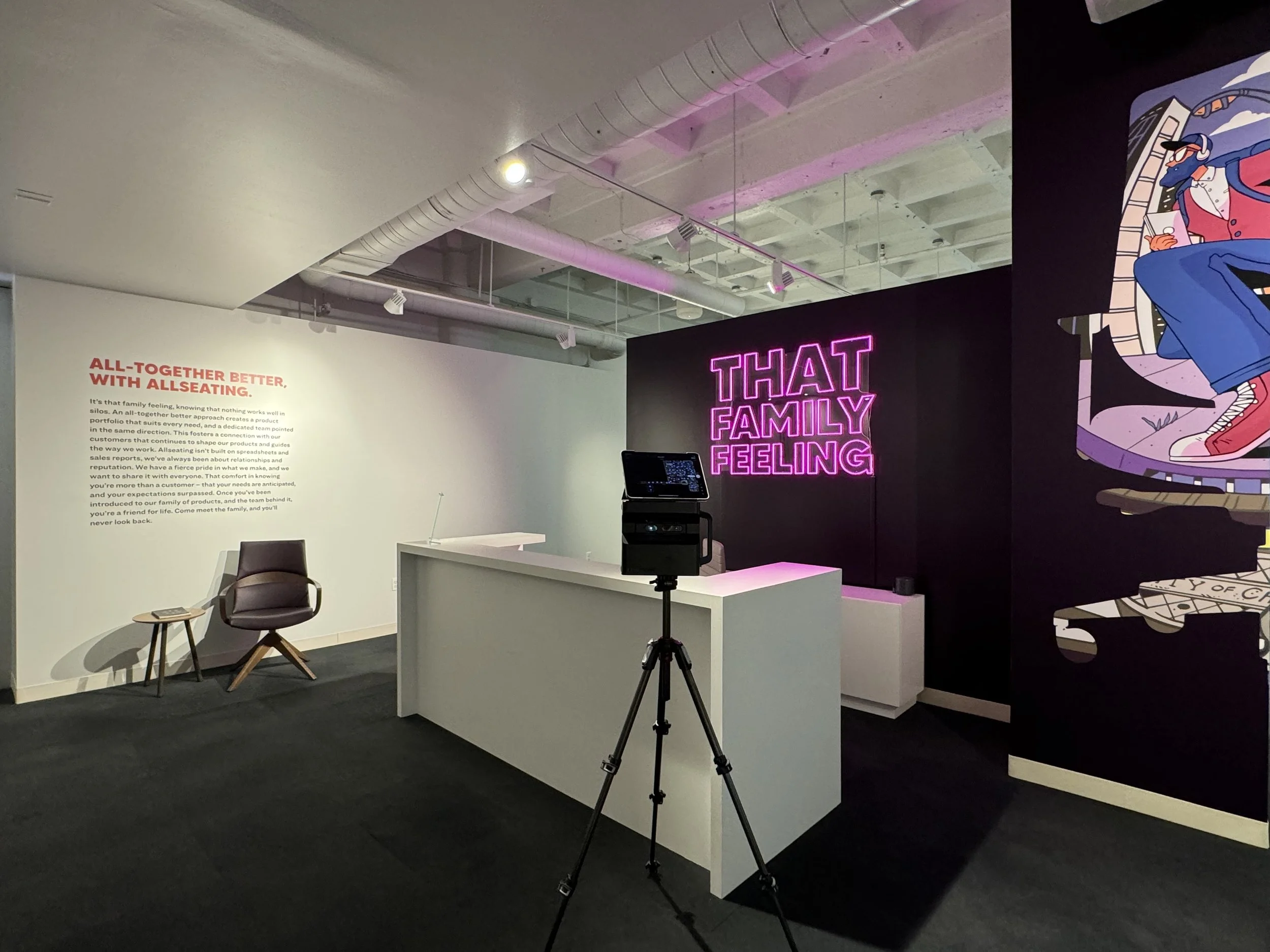
This year, we’re thrilled to participate in the NeoCon 2024 show in Chicago, supporting the commercial design industry with our augmented and virtual reality experiences. In this blog post, we’ll delve into the numerous benefits of 3D virtual tours and how they can elevate your showroom to new heights.
In the ever-evolving landscape of commercial furniture, staying ahead of the curve means embracing technology that enhances the buying experience and streamlines operations. At Lightbound 3D, we specialize in providing cutting-edge Matterport Real Estate and Virtual Tours. This year, we’re thrilled to participate in the NeoCon 2024 show in Chicago, supporting the commercial design industry with our augmented and virtual reality experiences. In this blog post, we’ll delve into the numerous benefits of 3D virtual tours and how they can elevate your showroom to new heights.
Enhanced Customer Engagement
One of the most significant advantages of 3D virtual tours is the unparalleled level of customer engagement they offer. Traditional showrooms require customers to physically visit the location, which can be a significant barrier. With 3D virtual tours, potential buyers can explore your showroom from the comfort of their homes or offices, at any time that suits them. This convenience translates to increased engagement, as customers can take their time to explore and make informed decisions.
Immersive Experience
A 3D virtual tour provides an immersive experience that photos and videos simply cannot match. Using advanced Matterport technology, we create a realistic, interactive 3D model of your showroom. Customers can “walk” through the space, zoom in on details, and even see products from different angles. This immersive experience helps customers visualize how the furniture will look and feel in their own spaces, bridging the gap between online browsing and in-person shopping.
Cost-Effective and Efficient
Setting up and maintaining a physical showroom can be costly and time-consuming. Rent, utilities, staffing, and maintenance all add up. A 3D virtual tour, on the other hand, is a one-time investment that can be used indefinitely. It allows you to showcase your products without the need for a large physical space, reducing overhead costs. Additionally, updates to the showroom can be made digitally, saving time and money.
Increased Reach
A physical showroom limits your reach to the local area, but a 3D virtual tour is accessible to anyone with an internet connection. This expanded reach means you can attract potential buyers from all over the world, increasing your customer base and potential sales. For businesses looking to expand into new markets, this is a game-changer.
Interactive Features
Our 3D virtual tours are not just about walking through a space; they include interactive features that enhance the customer experience. Embedded tags can provide detailed information about specific products, including dimensions, materials, and pricing. Customers can also view videos, read reviews, and even see how different pieces of furniture look together through virtual staging. These features provide a richer, more informative shopping experience.
Improved Sales and Marketing
A 3D virtual tour is a powerful sales and marketing tool. It can be easily integrated into your website, shared on social media, and included in email campaigns. Potential customers can explore your showroom at their convenience, which increases the likelihood of them making a purchase. Additionally, analytics from the virtual tour can provide valuable insights into customer behavior, helping you refine your marketing strategies and improve sales.
Time-Saving for Customers and Sales Teams
A 3D virtual tour saves time for both customers and sales teams. Customers can explore the showroom at their own pace, without the need to schedule appointments or travel. This is particularly beneficial for busy professionals or those located far from the showroom. For sales teams, virtual tours can pre-qualify leads by allowing customers to do their research beforehand, making in-person visits more productive.
Sustainability
In today’s eco-conscious world, sustainability is more important than ever. A 3D virtual tour reduces the need for physical travel, lowering your carbon footprint. It also minimizes the waste associated with maintaining and updating a physical showroom. By choosing a virtual showroom, you’re making an environmentally friendly choice that resonates with today’s consumers.
Supporting Furniture Manufacturers at NeoCon 2024
At Lightbound 3D, we’re excited to support furniture manufacturers at the 2024 NeoCon show in Chicago. NeoCon is the world’s leading platform for commercial design, where industry professionals gather to see the latest innovations. This year, we’re bringing our augmented and virtual reality experiences to the event, allowing attendees to immerse themselves in our 3D virtual tours.
By partnering with furniture manufacturers at NeoCon, we’re enabling them to showcase their products in an innovative and interactive way. Attendees will have the opportunity to explore virtual showrooms using VR headsets, providing a firsthand experience of the technology’s potential. We’ll also be demonstrating how our 3D virtual tours can be integrated with other technologies, such as augmented reality (AR) and Building Information Management (BIM), to create even more engaging and informative customer experiences.
Conclusion
The benefits of 3D virtual tours for commercial furniture showrooms are clear. From enhanced customer engagement and immersive experiences to cost savings and increased reach, this technology is revolutionizing the way we showcase and sell furniture. At Lightbound 3D, we’re at the forefront of this revolution, providing state-of-the-art virtual tours that transform the customer experience.
As we prepare for NeoCon 2024, we’re excited to share our innovations with the world and demonstrate how augmented and virtual reality can elevate your showroom to new heights. By supporting furniture manufacturers at the event, we’re helping them embrace the future of commercial furniture showrooms.
By leveraging 3D virtual tours, commercial furniture showrooms can not only stay competitive but also offer a superior shopping experience that meets the needs of today’s tech-savvy consumers. At Lightbound 3D, we’re committed to helping you achieve this transformation, ensuring your showroom stands out in a crowded market.

Boosting As-Built Drawings for Architects
In the realm of architecture and design, precision is paramount. Every detail, every measurement, every line matters. Traditionally, architects and designers relied on manual measurements and 2D blueprints. But technology has revolutionized this process. Enter point cloud data. This technology, combined with laser scanning, captures detailed spatial information of structures.
In the realm of architecture and design, precision is paramount. Every detail, every measurement, every line matters. Traditionally, architects and designers relied on manual measurements and 2D blueprints. But technology has revolutionized this process. Enter point cloud data. This technology, combined with laser scanning, captures detailed spatial information of structures. It's a game-changer for creating as-built drawings. In the realm of architecture and design, precision is paramount. Every detail, every measurement, every line matters.
Understanding Point Cloud Data and Its Relevance in Architecture
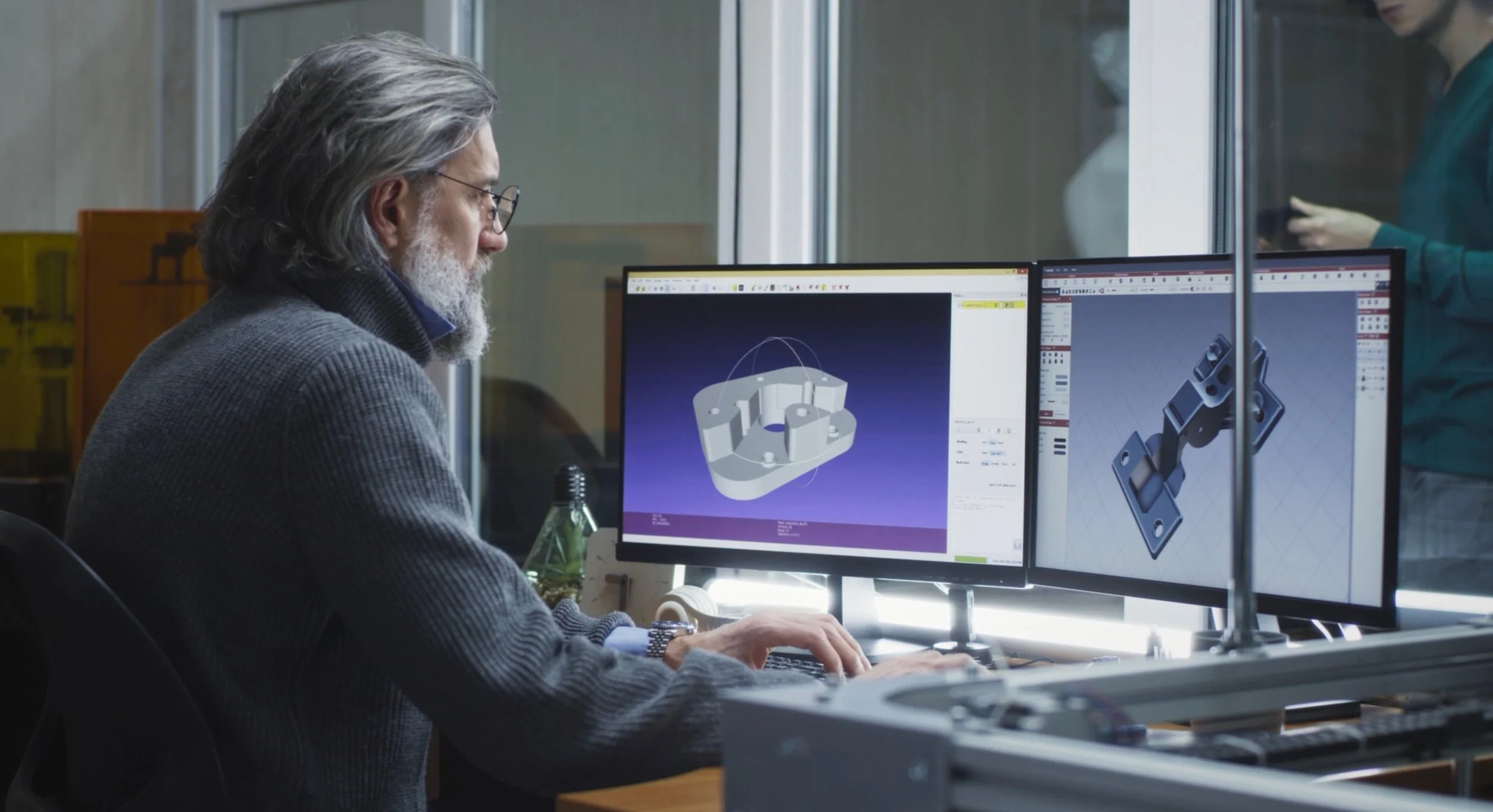
Point cloud data is a collection of data points in a 3D coordinate system. These points represent the external surface of an object or a structure.
In architecture, point cloud data is crucial. It provides a digital representation of physical spaces. This data aids in creating accurate as-built drawings, 3D models, and visualizations. It's a tool that enhances precision, efficiency, and collaboration in architectural projects.
The Process of Capturing Point Cloud Data
The process of capturing point cloud data involves the use of laser scanning technology. This technology measures the distance between the scanner and the object by emitting a laser beam towards the object and recording the time it takes for the beam to return.
Laser Scanning Technology
Laser scanning technology is a non-intrusive method of collecting detailed spatial data. It captures millions of data points in a short time, providing a high level of detail and accuracy.
This technology is particularly useful in architecture. It allows for the capture of complex structures and spaces, which can then be accurately represented in as-built drawings and 3D models.

Geospatial Technology in Architecture
Geospatial technology plays a significant role in architecture. It enhances the understanding of physical spaces, providing valuable context for design decisions.
With geospatial technology, architects can analyze and interpret spatial data. This data can inform design strategies, helping architects create structures that are in harmony with their surroundings.
Increased Accuracy and Detail
One of the main advantages of point cloud data is its ability to capture a high level of detail. It provides a comprehensive view of the physical environment, capturing every nook and cranny.
This level of detail translates into increased accuracy in as-built drawings. It allows architects and designers to create drawings that accurately reflect the existing conditions of a site or structure.
Time-Saving and Error Reduction
Point cloud data also saves time in the design process. Traditional methods of data collection can be time-consuming and prone to errors.
With point cloud data, architects and designers can quickly capture a large amount of data. This not only speeds up the design process but also reduces the likelihood of errors in the final drawings.
Integrating Point Cloud Data with BIM
Point cloud data can be integrated with Building Information Modeling (BIM) to create a comprehensive digital representation of a building. This integration allows for a more detailed analysis of the building's structure and systems.

Comprehensive Building Analysis
The integration of point cloud data with BIM allows for a comprehensive analysis of a building. It provides a detailed view of the building's structure, systems, and components.
This level of detail can be used to identify potential issues, plan for renovations, and make informed decisions about the building's design and maintenance. It provides architects and designers with a powerful tool for understanding and managing buildings.
Case Studies: Point Cloud Data in Action
Point cloud data has been used in numerous architectural projects to improve accuracy and efficiency. For instance, it was used in the renovation of the historic Notre Dame Cathedral in Paris.
The data helped architects understand the intricate details of the cathedral's structure. It allowed them to create accurate as-built drawings, which were crucial for the restoration process. This case study highlights the potential of point cloud data in preserving architectural heritage.
Overcoming Challenges and Limitations
While point cloud data offers numerous benefits, it also presents some challenges. These include managing large datasets and ensuring data accuracy.
However, with the right tools and training, these challenges can be overcome. For instance, robust data management systems can handle large datasets, while rigorous quality control processes can ensure data accuracy.
Getting Started with Point Cloud Data for Architectural Drawings
For architects and designers new to point cloud data, the first step is understanding the technology. This includes learning about laser scanning and geospatial technology.
Next, it's important to invest in the right tools. This includes laser scanning equipment and software for processing and visualizing point cloud data.
Invest in laser scanning equipment
Learn about geospatial technology
Get software for processing and visualizing point cloud data
Tips for Architects and Designers
When starting with point cloud data, it's crucial to start small. Begin with a small project to understand the process and workflow.
Also, continuous learning is key. Stay updated with the latest advancements in point cloud data technology and applications. This will help you leverage the technology effectively in your projects.
The Future of Architectural Design with Point Cloud Data
Point cloud data is set to revolutionize architectural design. It's not just about creating accurate as-built drawings anymore.
The technology is paving the way for immersive design experiences. Integration with virtual reality (VR) and augmented reality (AR) is becoming more common. This allows architects and designers to visualize and interact with their designs in a whole new way.
Conclusion: Embracing the Digital Transformation
Embracing point cloud data is a step towards the digital transformation of the architectural industry. It's a powerful tool that enhances accuracy, efficiency, and creativity in design. As technology advances, the potential applications of point cloud data in architecture and design will continue to expand.

How to Enhance Curb Appeal with Exterior Elevations
The exterior of your home is the first impression it makes. It's what people see as they pass by or pull into your driveway. But it's not just about looks. The exterior elevation of a building plays a crucial role in its overall architecture. It can significantly impact the property's curb appeal and, consequently, its value.
The exterior of your home is the first impression it makes. It's what people see as they pass by or pull into your driveway.

But it's not just about looks. The exterior elevation of a building plays a crucial role in its overall architecture. It can significantly impact the property's curb appeal and, consequently, its value.
In this guide, we'll explore how to enhance your property's curb appeal using exterior elevations. We'll delve into the key elements that make up an attractive exterior, from symmetry and balance to color and texture.
Whether you're a homeowner looking to spruce up your property, a real estate investor aiming to maximize returns, or an architect seeking inspiration, this guide is for you.
Join us as we uncover the secrets of creating stunning exterior elevations that not only look good but also add value to your property.
Understanding Exterior Elevations
Exterior elevations are architectural drawings that depict the outside view of a building. They provide a flat representation of the building's facade from different angles.

The Importance of Exterior Elevations in Architecture
Exterior elevations are vital in architecture. They help architects and builders visualize the final look of a building.
Moreover, they provide crucial information about the building's design, including the placement of windows, doors, and other architectural details.
Defining Curb Appeal and Its Significance
Curb appeal refers to the attractiveness of a property when viewed from the street. It's the first impression your home makes on visitors, neighbors, and potential buyers.
A property with high curb appeal can command a higher price in the real estate market. It also contributes to the overall aesthetic of a neighborhood, enhancing its appeal.
Key Elements of Exterior Elevations
Creating an appealing exterior elevation involves several key elements. These elements work together to create a harmonious and visually pleasing facade.

The key elements include:
Symmetry and balance
Color and texture
Architectural details
Symmetry and Balance
Symmetry and balance play a crucial role in exterior elevations. They contribute to the overall harmony of the design.
A symmetrical facade, where elements mirror each other on either side of a central point, can create a sense of order and stability.
Color and Texture
Color and texture can significantly enhance a building's facade. They add depth and interest to the exterior design.
The right color palette can highlight architectural features, while texture can create visual contrast and tactile interest.
Architectural Details
Architectural details like trim, shutters, and molding add character to a building's exterior. They can transform a plain facade into a visually appealing one.
These details should complement the architectural style of the building and reflect the homeowner's personal taste.
Material Selection for Durability and Aesthetics
Choosing the right materials for your exterior elevation is crucial. It not only affects the aesthetics but also the durability of your home.

Materials like brick, stone, and wood have different textures and colors. They can significantly influence the overall look of your home.
At the same time, these materials need to withstand the elements. So, it's essential to consider factors like climate and maintenance requirements when selecting materials.
The Role of Lighting in Exterior Design
Lighting plays a significant role in exterior design. It can accentuate architectural features and improve safety.
Strategically placed outdoor lights can highlight the beauty of your exterior elevation. They can create a warm and inviting ambiance after sunset.
At the same time, well-lit exteriors can deter intruders. They can also prevent accidents by illuminating pathways and entrances.
Enhancing Exterior Elevations with Landscaping
Landscaping is a powerful tool to enhance your exterior elevations. It can complement your home's architecture and create a harmonious outdoor aesthetic.

Well-planned landscaping can soften hard lines and add color to your property. It can also provide privacy and create a welcoming entrance.
Complementary Landscaping for Your Home Exterior
When planning your landscaping, consider your home's architectural style. The plants and design elements should complement, not compete with, your home's exterior.
For instance, a modern home might benefit from structured, minimalist landscaping. On the other hand, a cottage-style home might look best with lush, informal plantings.
Windows, Doors, and Roof Design
Windows and doors play a crucial role in exterior elevations. They not only provide functionality but also contribute to the overall aesthetic of your home.

The roof, too, is a significant element. It can dramatically alter the look of your house and its curb appeal.
Selecting Complementary Windows and Doors
When choosing windows and doors, consider their style, size, and placement. They should complement the architectural style of your home.
Also, remember that windows and doors can add color and texture to your exterior elevations.
The Impact of Roof Design on Exterior Elevations
The roof design can enhance or detract from your home's exterior elevations. Its shape, color, and material should harmonize with the rest of your home.
Moreover, a well-maintained roof can significantly boost your property's curb appeal.
Updating and Maintaining Your Exterior Elevation
Over time, exterior elevations may need updates to maintain their appeal. This could involve minor changes or a complete overhaul.

Regular maintenance is also crucial to keep your home looking its best.
Strategies for Updating Existing Elevations
Updating your exterior elevations can be as simple as a fresh coat of paint. Alternatively, you might consider adding new architectural details or updating your landscaping.
Remember, any changes should enhance your home's existing features, not detract from them.
Regular Maintenance for Lasting Appeal
Regular maintenance is key to preserving your home's curb appeal. This includes cleaning, repairing, and repainting as necessary.
By keeping your exterior elevations in good condition, you can ensure they continue to add value to your property.
Conclusion: The Value of Professional Consultation
While many exterior elevation improvements can be DIY projects, consulting with a professional can be invaluable. They can provide expert advice and help you avoid costly mistakes.
In conclusion, enhancing your exterior elevations can significantly improve your home's curb appeal. With careful planning and regular maintenance, your home can continue to impress for years to come.
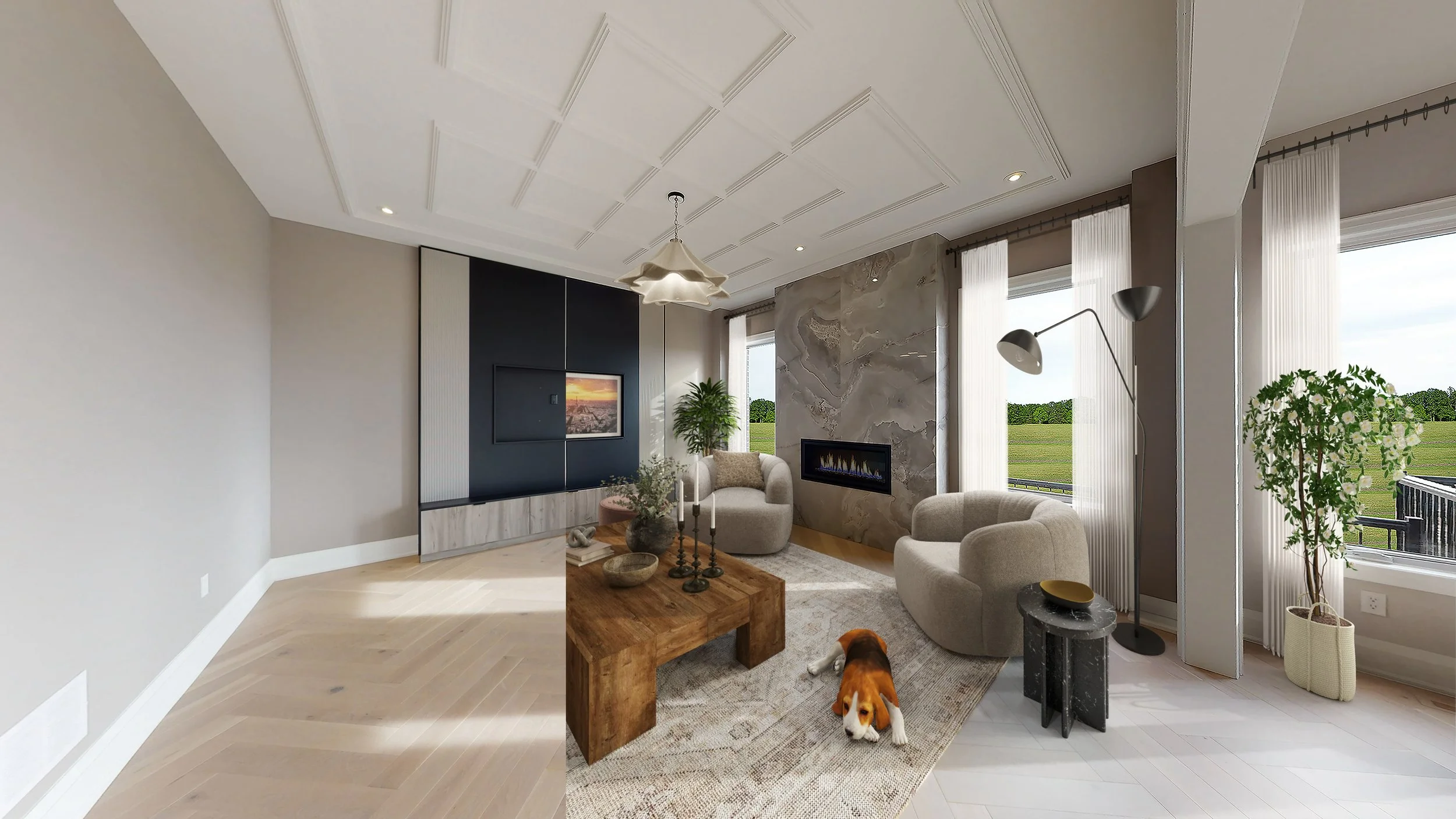
The Benefits of Virtual Staging in the Real Estate Market
In today's digital age, technology continues to revolutionize various industries, and real estate is no exception. One of the most impactful innovations in real estate marketing is virtual staging. This process involves digitally furnishing and decorating a property to showcase its potential, and it offers numerous benefits to both sellers and buyers. Here, we delve into the key advantages of virtual staging and how it is transforming the real estate market.
In today's digital age, technology continues to revolutionize various industries, and real estate is no exception. One of the most impactful innovations in real estate marketing is virtual staging. This process involves digitally furnishing and decorating a property to showcase its potential, and it offers numerous benefits to both sellers and buyers. Here, we delve into the key advantages of virtual staging and how it is transforming the real estate market.
1. Enhanced Visual Appeal
First impressions matter, especially in real estate. Properties that are visually appealing are more likely to attract potential buyers. Virtual staging allows real estate agents and sellers to present properties in the best possible light by adding stylish furniture, decor, and even making slight modifications to the interiors. This enhanced visual appeal helps potential buyers envision themselves living in the space, which can significantly increase their interest in the property.
2. Cost-Effective Solution
Traditional staging can be expensive and time-consuming. It involves renting furniture, hiring a staging company, and potentially even storage costs for existing furniture. Virtual staging, on the other hand, is a cost-effective alternative. It eliminates the need for physical furniture and the associated logistical challenges. For a fraction of the cost, sellers can have high-quality, visually appealing images that make their property stand out in the market.
3. Faster Sales
Properties that are virtually staged tend to sell faster. According to the Real Estate Staging Association, staged homes sell 73% faster than non-staged homes. This is because virtual staging helps create an emotional connection with buyers. When buyers can see a property as a finished product, they are more likely to make quicker decisions. This reduction in the time a property spends on the market can be a significant advantage for sellers.
4. Flexibility and Customization
One of the standout benefits of virtual staging is its flexibility. Unlike traditional staging, where physical furniture must be moved in and out, virtual staging allows for quick changes and customizations. If a particular style or arrangement doesn't appeal to potential buyers, it can be easily altered in the digital images. This flexibility ensures that the property can be tailored to meet the preferences of a diverse range of buyers.
5. Overcoming the Empty Room Challenge
Empty rooms can be difficult for buyers to interpret. They often struggle to visualize how furniture will fit and how the space can be utilized. Virtual staging fills this gap by providing context. It helps buyers understand the scale and functionality of each room, making it easier for them to see how their own furniture and belongings would fit into the space. This visualization can make a significant difference in their decision-making process.
6. Highlighting Potential
Virtual staging isn't just about adding furniture; it can also highlight a property's potential by showcasing different uses for spaces. For example, a small room can be staged as a home office, a nursery, or a guest room, depending on the target market. This ability to demonstrate various possibilities can broaden the appeal of the property and attract a wider range of buyers.
7. Improving Online Listings
In today's real estate market, the majority of buyers start their search online. High-quality photos are crucial for making a strong first impression. Virtual staging enhances online listings by providing visually compelling images that capture attention. Well-staged photos can increase the number of clicks and views a listing receives, leading to more inquiries and showings.
8. Adapting to Market Trends
Real estate trends and buyer preferences can change rapidly. Virtual staging allows sellers and agents to quickly adapt to these changes without the need for new furniture or decor. Whether it's a shift towards minimalist design or a preference for home offices, virtual staging can be adjusted to reflect the latest trends, ensuring that the property remains competitive in the market.
9. Reducing the Need for Physical Visits
Given the rise of virtual tours and remote buying, virtual staging plays a crucial role in providing a comprehensive view of the property. Potential buyers can get a better sense of the space without needing to visit in person, which is particularly beneficial in times of travel restrictions or for out-of-town buyers. This convenience can expedite the buying process and lead to quicker sales.
10. Environmental Benefits
Lastly, virtual staging is an environmentally friendly option. It reduces the need for physical resources such as furniture, transportation, and waste associated with traditional staging. By opting for digital solutions, the real estate industry can contribute to sustainability efforts and reduce its carbon footprint.
Conclusion
Virtual staging is a powerful tool in the modern real estate market. Its ability to enhance visual appeal, provide cost-effective solutions, and offer unparalleled flexibility makes it an attractive option for sellers and agents alike. As technology continues to advance, virtual staging will likely become an even more integral part of real estate marketing strategies, helping properties to sell faster and at higher prices.
By leveraging the benefits of virtual staging, real estate professionals can stay ahead in a competitive market, providing potential buyers with a clear vision of their future home.

How Laser Scanning Helps Facilities Managers Maintain Their Commercial Buildings
Leverage the potential of laser scanning to improve your facilities management procedures, ensuring that your commercial properties are kept to the highest standards and continue to be a valuable resource for many years.
In the ever-evolving realm of real estate, digital transformation is no longer a futuristic concept but a present-day reality. Facilities managers, in particular, are reaping the benefits of this shift. One of the most groundbreaking advancements in this field is the advent of laser scanning and point cloud data, a technology that is transforming real estate management by providing precise and comprehensive data about buildings. Let's delve into how laser scanning, including 3D scanning services, is revolutionizing the maintenance of commercial buildings.
The Power of 3D Laser Scanning
Laser scanning, especially terrestrial laser scanning, involves the use of laser technology to capture detailed and accurate measurements of a building’s interior and exterior. This technology is crucial for facilities managers who need to maintain and manage commercial buildings efficiently.
Key Benefits of Laser Scanning for Facilities Management:
Accurate Data Collection
Laser scanning provides highly accurate data about a building's structure, dimensions, and layout. This data is essential for calculating the gross internal area (GIA) and gross floor area (GFA), critical metrics in facilities management. Understanding what the gross floor area means helps in planning maintenance schedules and managing space utilization effectively.
Detailed 3D Models
The data collected through laser scanning can be used to create detailed 3D models of buildings. These models are invaluable for visualizing the current state of the building, identifying potential issues, and planning renovations or maintenance tasks. They also support Building Information Management (BIM) processes, enabling better collaboration and information sharing among stakeholders.
Enhanced Maintenance Planning
Facilities managers can use 3D laser scanning services to detect wear and tear, structural issues, and other maintenance needs that are not always visible to the naked eye. Early detection allows for proactive maintenance, reducing the risk of costly repairs and downtime.
Efficiency and Cost Savings
By utilizing laser scanning, facilities managers can reduce the time and labor required for manual inspections and measurements. The efficiency gained through this technology translates into significant cost savings over time.
Accessibility of Data
3D scanning services are becoming more accessible for facilities managers, making it a practical option for buildings of any size. The digital transformation in real estate is making advanced tools like laser scanning more accessible and affordable.
Real-World Applications in Commercial Buildings
Facilities managers in various sectors, including AEC (Architecture, Engineering, and Construction), are leveraging laser scanning to improve their operations. Here are some practical applications:
Building Condition Assessments
Regular scans can help assess the condition of a building’s structure and systems, ensuring they are maintained to the highest standards.
Space Management
Accurate measurements of GIA and GFA allow for better space management, helping to optimize the use of available space and improve operational efficiency.
Renovation and Retrofit Projects
Detailed 3D models support renovation and retrofit projects by providing precise data for planning and execution. This minimizes errors and ensures that projects are completed on time and within budget.
Compliance and Safety
Laser scanning helps ensure compliance with safety regulations by providing accurate and up-to-date information about the building’s structure and systems.
Conclusion
Laser scanning is transforming real estate management by providing facilities managers with the tools they need to maintain and manage commercial buildings more effectively. As digital transformation in real estate continues to evolve, the adoption of advanced technologies like 3D laser scanning will become increasingly essential. Whether you are searching for "3D laser scanning services near me" or exploring how digital transformation in real estate can benefit your operations, laser scanning offers a wealth of advantages that can help you stay ahead in the competitive world of facilities management.
Embrace the power of laser scanning to enhance your facilities management practices, ensuring that your commercial buildings are maintained to the highest standards and remain a valuable asset for years to come.

The Essentials of Effective Laser Scanning for Building Projects
Laser scanning technology has revolutionized the way we approach construction and architectural projects. Utilizing highly detailed and accurate measurements, 3D laser scanning services are critical in capturing existing conditions and facilitating efficient project planning and management. Whether it's a restoration, renovation, or new construction, understanding the best practices for effective laser scanning can dramatically improve the accuracy and utility of your final models.
The Essentials of Effective Laser Scanning for Building Projects
Laser scanning technology has revolutionized the way we approach construction and architectural projects. Utilizing highly detailed and accurate measurements, 3D laser scanning services are critical in capturing existing conditions and facilitating efficient project planning and management. Whether it's a restoration, renovation, or new construction, understanding the best practices for effective laser scanning can dramatically improve the accuracy and utility of your final models.
1. Choosing the Right Scanner for the Job
The type of scanner plays a crucial role in the success of a laser scanning project. Terrestrial laser scanning (TLS) systems are renowned for their accuracy and are ideal for detailed construction projects. These high-resolution 3D laser scanners provide detailed point cloud data necessary for creating precise 3D BIM models. Facilities managers and project planners should seek out “3D scanning services near me” to find local expertise and cutting-edge equipment.
2. Understanding Measurements and Areas
Laser scanning helps accurately capture both the gross floor area and gross internal area, which are vital for planning and regulatory compliance. The gross floor area means the total area enclosed within the building, including walls, while the gross internal area covers the total area of all floors within the shell of the building. Accurate capture of these measurements ensures that all planning and design activities are based on true physical dimensions.
3. Integration with BIM (Building Information Modeling)
Integrating laser scan data into BIM platforms is a cornerstone of modern AEC (Architecture, Engineering, and Construction) practices. A 3D BIM model enriched with scan data from existing conditions allows architects and engineers to visualize and manipulate real-world conditions in a virtual environment. This integration supports everything from project management to reverse engineering.
4. Maximizing the Level of Detail
The level of detail (LOD) in your captured data can significantly affect your project’s outcomes. For projects requiring high fidelity, it's important to utilize scanners that can capture built data at the desired resolution. This highly detailed point cloud data is essential for creating accurate floor plans and facilitating reality capture, which is crucial for complex or sensitive projects.
5. Effective Project Management
Effective management of laser scanning activities involves careful planning and coordination. Ensure that the scope of scanning provides comprehensive coverage of all necessary areas. Utilize experienced scan technicians who understand the nuances of construction projects and can optimize the scanning process to capture all relevant data efficiently.
6. Use of Advanced Processing Software
Once the scan data is collected, it needs to be processed into usable formats. Advanced software can transform raw data into formats that are compatible with BIM software, enhancing the utility of the captured data. This processing is crucial for ensuring that the data can be effectively used for design, analysis, and decision-making.
7. Regular Calibration and Maintenance of Equipment
To ensure that 3D laser scanners and other related equipment deliver accurate measurements, regular calibration and maintenance are essential. This preventative measure helps avoid potential discrepancies in scan data, which can lead to costly mistakes and delays in construction projects.
8. Collaboration and Communication
Laser scanning projects require the collaboration of various stakeholders, including architects, engineers, construction managers, and facilities managers. Effective communication among all parties ensures that the scan data meets the project’s requirements and supports all phases of the construction lifecycle.
Conclusion
Laser scanning is a powerful tool in the arsenal of modern AEC professionals, offering a path to more accurate, efficient, and detailed building analysis and project management. By following these best practices, professionals can leverage this technology to its full potential, ensuring that their construction projects are not only successful but also optimal in terms of cost, time, and resources. For those seeking “scan services near me,” remember to look for providers that offer the latest in 3D laser scanning technology and have a robust portfolio of successful projects.
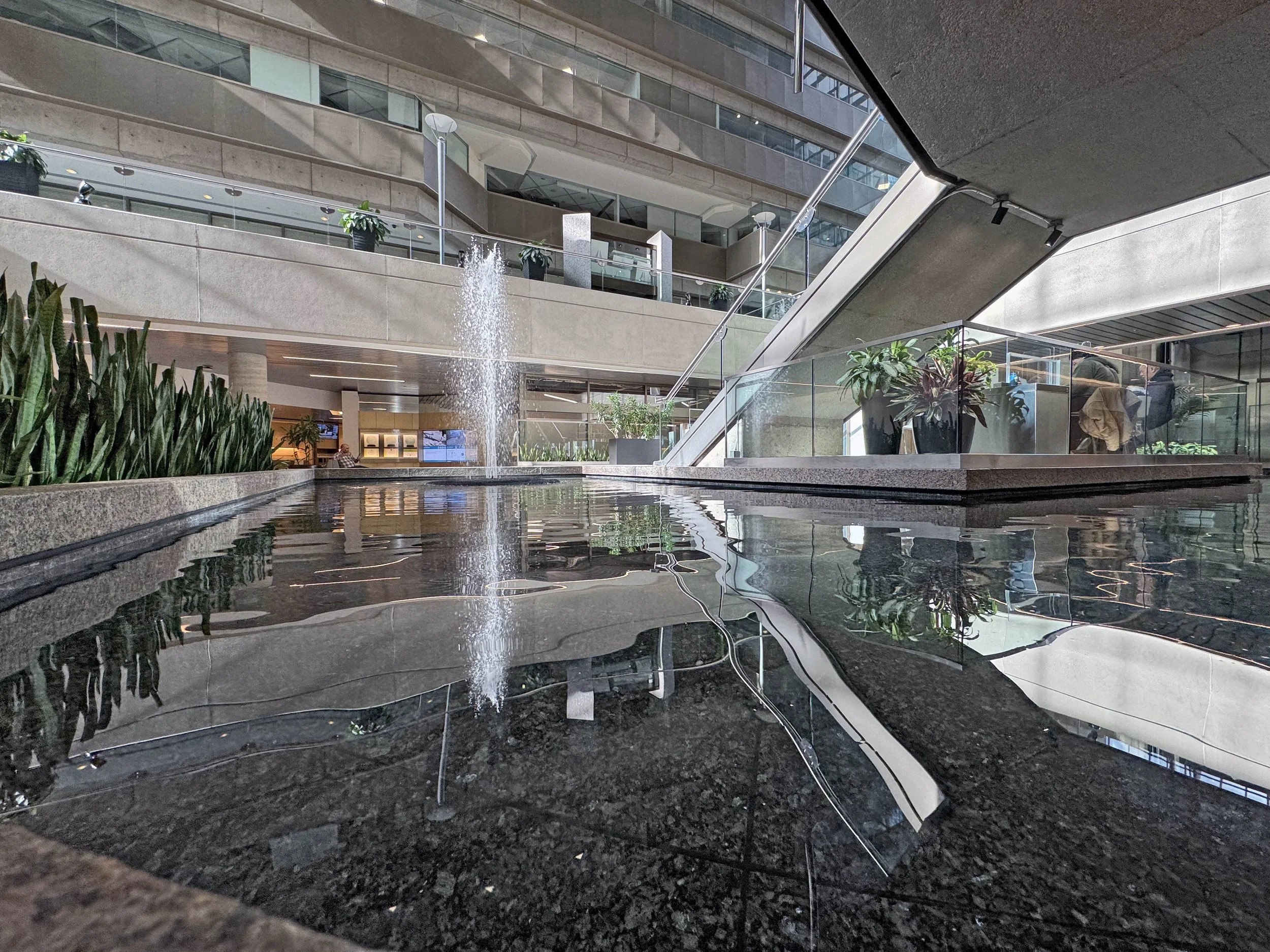
The Strategic Benefits of CoStar's Acquisition of Matterport
At Lightbound 3D, we are thrilled about the CoStar Group's acquisition of Matterport! This merger marks a monumental step forward in the real estate digital landscape, promising enhanced 3D virtual experiences that align closely with our vision of innovation and quality.
CoStar Group's recent acquisition of Matterport marks a significant advancement in the real estate industry, particularly in how properties are marketed and viewed digitally. Here are the key benefits this merger brings to the table:
Enhanced Digital Experience: CoStar can now integrate Matterport's 3D imaging and digital twin technology across its platforms, offering a more immersive virtual tour experience. This will likely increase user engagement and time spent on listings, enhancing the overall user experience.
Broadened Market Reach: With Matterport’s technology, CoStar can expand its digital offerings beyond just property listings to include more complex digital modeling for various market needs, potentially capturing a larger market share.
Improved Listing Quality: The integration of Matterport's detailed 3D models will improve the quality of property listings, providing potential buyers and renters with a more accurate and detailed view of the properties. This can help in better decision-making and reduce the time spent on physical tours.
Innovation and Competitive Edge: The acquisition places CoStar at the forefront of innovation in the real estate digital marketplace. CoStar can leverage Matterport's advanced technology to stay ahead of competitors and offer unique features that others may not have.
Operational Synergies: CoStar's extensive real estate database combined with Matterport's imaging technology can lead to significant operational efficiencies. These synergies can optimize costs and improve service delivery, making the platforms more effective and user-friendly.
The CoStar-Matterport deal is poised to reshape the future of real estate marketing, offering a more detailed, interactive, and efficient approach to online property exploration. By leveraging each other's strengths, they can deliver unparalleled value to their users, setting new standards in the industry.
At Lightbound 3D, we are thrilled about the CoStar Group's acquisition of Matterport! This merger marks a monumental step forward in the real estate digital landscape, promising enhanced 3D virtual experiences that align closely with our vision of innovation and quality. We look forward to seeing how these new developments can further enrich our service offerings and expand the possibilities for our clients and the industry at large. The future of real estate visualization is bright, and we are excited to be part of this evolving journey.

Enabling Live Interactions in 3D Virtual Tours
In today's real estate market, technology continues to push the boundaries of how we explore, collaborate, and ultimately decide on our next living space. One of the most exciting advancements is the integration of live interactions within 3D virtual tours. This technology is not just changing how agents sell properties—it's redefining the entire buying experience.
In today's real estate market, technology continues to push the boundaries of how we explore, collaborate, and ultimately decide on our next living space. One of the most exciting advancements is the integration of live interactions within 3D virtual tours. This technology is not just changing how agents sell properties—it's redefining the entire buying experience.
The Power of 3D Virtual Tours
3D virtual tours have been around for a while, allowing potential buyers to navigate through properties digitally before deciding whether to visit in person. These tours give a realistic sense of the property’s layout, decor, and ambiance. However, the recent addition of live interaction capabilities takes these experiences to a whole new level.
Live Interactions: A Game Changer
Live interaction features in 3D virtual tours can be likened to having a real estate agent or a designer right there with you, guiding you through the property. But instead of being physically present, they interact with you through live chat or video calls embedded within the virtual tour platform. Here’s how this technology is transforming key aspects of the real estate business:
Enhanced Exploration
Live interactions enable potential buyers to explore properties more thoroughly. As they navigate through the 3D tour, they can ask questions and receive answers in real-time. This immediate communication helps to clarify doubts quickly, making the exploration process more effective and engaging.
Improved Collaboration
Buying a home is often a collaborative decision. Live interactions within virtual tours allow multiple stakeholders, like family members or investment partners, to join the tour from different locations. They can discuss and evaluate the property together in real-time, making collaborative decision-making seamless and more informed.
Efficient Sales Process
Real estate agents benefit significantly from live interaction features. By hosting live tours, they can interact with multiple clients across various time zones without the need for physical travel. This efficiency can lead to faster decision-making, increased sales, and higher customer satisfaction as clients feel more supported and engaged throughout the process.
Real-World Applications
Consider a young couple looking for their first home. Through a live interactive 3D tour, they can navigate through various properties while simultaneously discussing their needs with an agent. They can ask for close-ups of kitchen finishes, test out light fixtures, or explore the view from a balcony—all in real-time. This level of interactive exploration can significantly enhance their understanding and connection with the property.
The Future of Real Estate
As technology continues to evolve, the potential for even more advanced features in 3D virtual tours is vast. Imagine a scenario where AI-powered bots join live interactions, providing instant data about the property or neighborhood based on user queries. Or consider the possibility of augmented reality (AR) elements that allow users to place their furniture in the virtual space to visualize it as their own.
The integration of live interactions in 3D virtual tours is not just a temporary trend; it's a fundamental shift in the real estate landscape. This technology empowers buyers and sellers to connect more meaningfully, breaking down traditional barriers to communication and decision-making. It ensures that the process is not only about transactions but also about building trust and rapport, transforming how properties are presented and sold in the digital age.
As we look to the future, the role of real estate professionals will evolve alongside these technological advancements, enhancing their ability to provide value and drive customer satisfaction. The fusion of technology and personalized service in 3D virtual tours is just the beginning, and its impact will be felt across the industry for years to come.

How 3D Virtual Tours are Revolutionizing the Hospitality Industry
The advent of 3D virtual tours is dramatically reshaping the landscape of the hospitality industry, providing a dynamic way for hotels, resorts, and other properties to enhance guest engagement and boost bookings. Here's an exploration of how this innovative technology is making waves, transforming the way establishments connect with potential guests, and enhancing the overall guest experience.
The advent of 3D virtual tours is dramatically reshaping the landscape of the hospitality industry, providing a dynamic way for hotels, resorts, and other properties to enhance guest engagement and boost bookings. Here's an exploration of how this innovative technology is making waves, transforming the way establishments connect with potential guests, and enhancing the overall guest experience.
Enhancing Visual Marketing
Marketing strategies in hospitality have always hinged on the ability to showcase properties in their best light. 3D virtual tours elevate this capability to an unprecedented level. Unlike traditional photographs or video tours, 3D tours offer a fully immersive experience. Potential guests can virtually walk through a property, exploring rooms, amenities, and facilities at their own pace and from the comfort of their home. This can dramatically increase a property's appeal and significantly drive up booking rates.
Increasing Booking Confidence
One of the most significant impacts of 3D tours is on consumer confidence. Booking a hotel or resort often involves uncertainty, particularly when traveling to unfamiliar destinations. 3D virtual tours diminish this uncertainty, offering a transparent, interactive view of the property. This transparency not only builds trust but also helps in reducing the rate of booking cancellations, as guests know exactly what to expect upon arrival.
Streamlining Decision-Making Processes
For groups and event planners, 3D tours can simplify the decision-making process. Whether planning a wedding, a corporate event, or a large family reunion, event planners can explore multiple venues quickly and easily, without the need to travel to each location. This not only saves time but also reduces the expenses involved in scouting potential venues.
Customizing Guest Experiences
Another exciting development facilitated by 3D technology is the ability to customize experiences before even setting foot on the property. Some innovative properties are using 3D tours to allow guests to choose specific rooms based on their virtual experience, or even to request custom arrangements such as the layout of a meeting room, specific decor, or pre-set amenities in their rooms.
Training and Operational Efficiency
Beyond guest interaction, 3D virtual tours are also transforming internal operations. They can serve as excellent training tools for new staff, familiarizing them with the layout and services of the property before they start, which can enhance operational efficiency and improve guest services. Additionally, they can help in maintenance and operations by providing a detailed view of the property’s facilities, aiding in planning renovations or repairs without the need to physically inspect every area.
Competitive Edge in a Digital Age
In today's digital era, the use of advanced technologies such as 3D virtual tours can significantly differentiate a hospitality business from its competitors. Properties that adopt and integrate this technology effectively are seen as forward-thinking and customer-centric, which can greatly enhance their brand appeal.
Conclusion
3D virtual tours represent a powerful tool in the arsenal of hospitality businesses, capable of transforming guest experiences, streamlining operations, and boosting bookings. As this technology becomes more accessible and affordable, its adoption within the industry is expected to accelerate, setting new standards in how hospitality businesses market themselves and interact with potential guests. For any property looking to enhance its market presence and operational efficiency, embracing 3D virtual tours is not just an option; it’s becoming a necessity.

Elevating Standards: The Role of Drone Inspections in Construction and Building Verification
In recent years, the construction industry has seen a revolutionary shift in how inspections and verifications are conducted, thanks to the advent and integration of drone technology. Drone inspections have emerged as a game-changer, offering a blend of efficiency, safety, and precision that traditional methods struggle to match. This blog post explores how drones are transforming the landscape of construction and building inspections, making them more accessible, accurate, and efficient than ever before.
Unmanned Aerial Inspections: A New Perspective
Gone are the days when scaffolding and ladders were the only means to inspect a building's facade or a construction site's progress. Drones, or Unmanned Aerial Vehicles (UAVs), equipped with high-resolution cameras and other sensors, now offer a bird's-eye view, providing detailed visual data that was once hard or even impossible to obtain. This capability is not just about convenience; it's about creating a safer, more efficient, and cost-effective approach to construction and building inspections.
Advantages of Drone Inspections
1. Enhanced Safety: Safety is a paramount concern in any construction project. Drones minimize the need for personnel to physically access dangerous or hard-to-reach areas, significantly reducing the risk of accidents.
2. Time and Cost Efficiency: Conducting inspections with drones is quicker than traditional methods, reducing downtime and labor costs. Drones can cover large areas in a fraction of the time it would take a human inspector, streamlining the inspection process.
3. Detailed and Accurate Data: Drones equipped with advanced imaging technology can capture detailed photographs, videos, and thermal images. This data is invaluable for identifying defects, ensuring compliance with plans, and monitoring the project's progress.
4. Improved Accessibility: Drones can easily access and inspect challenging locations, such as high roofs, tall structures, and expansive construction sites, ensuring no area is overlooked.
5. Environmental Monitoring: Beyond structural inspections, drones can also monitor environmental conditions and compliance, ensuring that construction projects adhere to environmental standards and regulations.
Applications in Construction and Building Inspections
Drone inspections have found diverse applications in the construction industry, including:
Pre-construction Surveys: Drones can survey potential construction sites, providing crucial data for planning and design.
Ongoing Construction Monitoring: UAVs offer a way to continuously monitor construction progress, compare it against project timelines, and adjust workflows as needed.
Structural Inspections: Drones inspect buildings for structural integrity, damage, or wear and tear, facilitating regular maintenance and safety checks.
Compliance Verification: UAVs help verify that construction projects comply with architectural plans and building codes, ensuring quality and regulatory compliance.
Roof Inspections: Specifically, drones have revolutionized roof inspections, providing a safe and efficient way to assess conditions, identify issues, and estimate repair costs.
The Future of Drone Inspections
As drone technology continues to advance, the potential for its application in construction and building inspections grows. Innovations in AI and machine learning are making drones smarter, enabling automated inspections, real-time data analysis, and predictive maintenance. Furthermore, integration with Building Information Modeling (BIM) systems is enhancing the ability to manage projects and maintain buildings efficiently.
Conclusion
Drone inspections represent a significant leap forward in how we approach construction and building maintenance. By harnessing the power of UAV technology, the construction industry can achieve higher safety standards, better quality control, and increased operational efficiency. As drones become more sophisticated and integrated into construction processes, we can expect to see even greater improvements in how projects are planned, monitored, and executed. The sky's the limit for drones in construction, and the industry is just beginning to explore the full extent of their potential.
The adoption of drone technology in construction and building inspections is not just a trend; it's a testament to the industry's evolution towards embracing digital innovation for better outcomes. As we look to the future, drones will undoubtedly play a pivotal role in shaping the landscapes of our cities and the standards by which we build them.

Streamline manufacturing processes with 3D Digital Twins
In the evolving landscape of manufacturing, the adoption of innovative technologies is not just a trend but a necessity for staying competitive. Among these technologies, 3D digital twins stand out as a transformative tool for streamlining training and improving factory processes. This blog post explores how leveraging 3D digital twins can revolutionize manufacturing operations, enhance employee training, and significantly optimize production processes.
In the evolving landscape of manufacturing, the adoption of innovative technologies is not just a trend but a necessity for staying competitive. Among these technologies, 3D digital twins stand out as a transformative tool for streamlining training and improving factory processes. This blog post explores how leveraging 3D digital twins can revolutionize manufacturing operations, enhance employee training, and significantly optimize production processes.
Understanding 3D Digital Twins
A 3D digital twin is a virtual replica of a physical entity, process, or system. This technology goes beyond mere visual representation; it includes real-time data, interactive elements, and analytics, which allow for detailed analysis and simulation. In the context of manufacturing, digital twins can replicate entire factories, production lines, or specific machinery, providing an invaluable resource for training and process improvement.
Streamlining Training with 3D Digital Twins
Interactive Learning Environments
Traditional training methods often rely on manuals, videos, or direct observation, which can be time-consuming and may not fully engage learners. 3D digital twins create interactive and immersive learning environments where employees can explore and interact with virtual models of their workspaces and machinery. This hands-on experience enhances understanding and retention, allowing for more effective training.
Safe Simulation of Scenarios
Training in a live factory environment can pose safety risks, especially for novices. With digital twins, employees can safely simulate various operational scenarios, including handling emergencies or machine failures, without any real-world risk. This approach not only protects workers but also builds their confidence in managing different situations.
Customized Learning Paths
3D digital twins enable the customization of training modules according to the specific needs of an employee or role. Workers can progress at their own pace, revisiting complex topics as needed. This personalized learning experience ensures that all team members are adequately prepared for their responsibilities.
Improving Factory Processes with 3D Digital Twins
Real-time Monitoring and Analytics
Digital twins integrate with IoT devices and sensors within the factory to provide real-time monitoring and analytics. This integration allows for the identification of inefficiencies, bottlenecks, and opportunities for process optimization. Managers can use these insights to make informed decisions and implement improvements quickly.
Predictive Maintenance and Scenario Testing
One of the significant advantages of digital twins is their ability to simulate future scenarios based on current data. This capability is particularly useful for predictive maintenance, where the system can forecast machinery failures before they occur, reducing downtime and maintenance costs. Additionally, factories can test potential process changes in the virtual environment to assess their impact without disrupting actual production.
Collaboration and Innovation
Digital twins facilitate collaboration among team members, who can access the virtual factory model from anywhere. This accessibility encourages the sharing of ideas and problem-solving strategies, driving innovation. Furthermore, the ability to experiment with process changes in a risk-free environment promotes a culture of continuous improvement.
Conclusion
The integration of 3D digital twins into manufacturing operations offers a compelling solution for enhancing training and improving factory processes. By creating realistic, interactive learning experiences, providing insights through real-time data, and enabling the safe simulation of scenarios, digital twins serve as a foundational technology for the factories of the future. As industries continue to embrace digital transformation, the role of 3D digital twins in streamlining operations and fostering innovation will undoubtedly expand, marking a new era in manufacturing excellence.

Transforming the AEC Landscape: The Revolutionary Impact of Laser Scanning
The Architecture, Engineering, and Construction (AEC) industries are undergoing a significant transformation, driven by the integration of advanced technologies. Among these, laser scanning stands out as a pivotal innovation, revolutionizing project planning, execution, and management. This blog post delves into the myriad benefits of laser scanning, illustrating how it is reshaping the AEC industries.
The Architecture, Engineering, and Construction (AEC) industries are undergoing a significant transformation, driven by the integration of advanced technologies. Among these, laser scanning stands out as a pivotal innovation, revolutionizing project planning, execution, and management. This blog post delves into the myriad benefits of laser scanning, illustrating how it is reshaping the AEC industries.
Precision and Accuracy
Laser scanning, also known as 3D scanning or LiDAR, employs laser light to precisely measure and capture the environment in three dimensions. This technology enables the creation of detailed digital replicas of physical sites, known as point clouds. The accuracy of laser scanning is unparalleled, capturing minute details and irregularities that traditional survey methods might miss. This precision facilitates error detection early in the design phase, reducing costly revisions during construction.
Time and Cost Efficiency
One of the most compelling advantages of laser scanning is its efficiency. Traditional surveying methods are time-consuming and labor-intensive, often requiring multiple site visits. In contrast, laser scanning can capture comprehensive data in a single visit, dramatically reducing man-hours and associated costs. The speed of data acquisition also means that projects can move forward more rapidly, shortening the overall project timeline.
Enhanced Collaboration and Communication
The digital models generated from laser scans can be shared across teams, irrespective of their physical location. This fosters better collaboration and communication among architects, engineers, and construction professionals. Stakeholders can visualize the project in a detailed and interactive 3D environment, making it easier to discuss plans, identify potential issues, and make informed decisions.
Risk Mitigation
Laser scanning plays a crucial role in risk management within the AEC industries. By providing accurate measurements and detailed models of existing conditions, it helps in identifying hazards and planning mitigation strategies beforehand. This proactive approach not only ensures the safety of the construction crew but also minimizes the risk of project delays and cost overruns.
Sustainability
Sustainability is a growing concern in the AEC industries. Laser scanning contributes to sustainable practices by enabling precise material estimations, thus reducing waste. Moreover, the ability to retrofit and rehabilitate existing structures with laser-scanned data supports the preservation of cultural heritage and reduces the need for new materials and construction, aligning with eco-friendly objectives.
Facility Management and Future Modifications
Post-construction, the detailed data acquired through laser scanning prove invaluable for facility management and future modifications. Facility managers can use the digital models for maintenance planning, space management, and energy analysis. Additionally, if modifications are required, the existing digital model provides a precise baseline for planning changes, saving time and resources.
Conclusion
The benefits of laser scanning for the AEC industries are profound and multifaceted. By offering unparalleled precision, efficiency, and collaboration, laser scanning is not just an option but a necessity for modern construction projects. It paves the way for safer, more sustainable, and cost-effective practices, ensuring the long-term success and resilience of the AEC industries. As technology continues to advance, the integration of laser scanning will undoubtedly become more widespread, further enhancing its impact on the field. The future of construction lies in embracing these technological innovations, with laser scanning leading the charge in transforming the AEC landscape.