

The Power of Virtual Staging: Transforming Real Estate Marketing
Virtual staging not only enhances listing photos but also helps buyers envision the potential of a space. By digitally furnishing, remodeling, or redesigning a property, virtual staging can attract more interest, sell homes faster, and maximize sale prices. Let’s explore how this innovative technology is revolutionizing real estate marketing.
Introduction
In today’s competitive real estate market, standing out is more important than ever. Buyers are drawn to homes that feel inviting, modern, and stylish, yet not every property is ready for a perfect photoshoot. Virtual staging has emerged as a game-changing solution, allowing sellers, agents, and developers to present homes in their best light without the expense or hassle of physical staging.
Virtual staging not only enhances listing photos but also helps buyers envision the potential of a space. By digitally furnishing, remodeling, or redesigning a property, virtual staging can attract more interest, sell homes faster, and maximize sale prices. Let’s explore how this innovative technology is revolutionizing real estate marketing.
What Is Virtual Staging?
Virtual staging is the process of digitally furnishing and enhancing photos of vacant or outdated spaces to make them more appealing to potential buyers. Using advanced rendering techniques, professional designers create realistic, high-quality visuals that bring empty rooms to life. Whether a home needs contemporary furniture, a remodeled kitchen, or a complete style overhaul, virtual staging makes it possible—all without the cost and logistics of traditional staging.
Unlike physical staging, which involves renting and transporting real furniture, virtual staging is done entirely through software. The result? A seamless, photorealistic representation of the space that helps buyers emotionally connect with the property.
The Benefits of Virtual Staging
1. Cost-Effective and Efficient
Traditional home staging can cost thousands of dollars per month, particularly for luxury properties. Virtual staging, on the other hand, provides a one-time, affordable solution that achieves the same result—making a home look move-in ready and desirable. By eliminating the need for furniture rentals, delivery fees, and labor costs, sellers can achieve professional-grade marketing materials at a fraction of the price.
2. Faster Sales and Higher Offers
Homes that look well-designed and furnished tend to sell faster. Buyers often struggle to visualize how an empty space would look with furniture, which can make them hesitant to commit. A virtually staged home allows them to see the full potential of the space, leading to quicker decisions and, often, higher offers. Properties that appear well-maintained and move-in ready tend to command top dollar in the market.
3. Flexible Design Options
Every buyer has a unique taste, and what appeals to one might not work for another. Virtual staging allows for customization, offering different styles to match the target audience. Whether the property is suited for modern, rustic, industrial, or minimalist décor, virtual staging can tailor the design to fit the ideal buyer’s preferences. Sellers can even provide multiple design options to showcase the home’s versatility.
4. Ideal for Vacant or Outdated Homes
Vacant homes can feel cold and uninspiring, while outdated homes may turn off potential buyers who struggle to see past the current design. Virtual staging breathes new life into these properties, helping them compete with professionally staged homes. It allows buyers to focus on the property’s true potential rather than its current condition.
5. Enhancing Online Listings
In the digital age, online listings are often the first impression buyers have of a property. High-quality photos that showcase a beautifully staged home are more likely to capture interest and generate inquiries. Since most homebuyers start their search online, virtual staging provides a competitive edge by making listings more visually appealing and engaging.
How Virtual Staging Works
The process of virtual staging is simple and efficient:
Photograph the Property – High-resolution images of the vacant or outdated space are taken to serve as the foundation for virtual staging.
Choose a Design Style – Sellers and agents can select from various interior design styles that best suit the property and its target audience.
Professional Rendering – Designers digitally furnish the space, adding furniture, decor, and enhancements that align with the chosen style.
Review and Revise – Clients can request revisions to ensure the final images meet their expectations.
Use in Marketing – The finished, professionally staged images are added to listings, brochures, and social media campaigns to attract potential buyers.
This seamless process makes virtual staging a highly effective marketing tool with a quick turnaround time.
Why Choose Professional Virtual Staging?
With the rise of digital marketing, many DIY virtual staging apps and services have emerged. However, not all virtual staging is created equal. Professional virtual staging services offer high-quality, photorealistic results that make a home look genuinely inviting and livable.
What Sets Professional Virtual Staging Apart?
✔ Free Revisions – Ensuring that the final images meet the client’s expectations. ✔ Quality Results – Using expert designers and advanced rendering techniques to create stunning visuals. ✔ Personalized Team – A dedicated team that understands the nuances of real estate marketing. ✔ Happiness Guaranteed – Delivering satisfaction through professional craftsmanship and attention to detail.
When selecting a virtual staging provider, it’s essential to work with experts who understand how to create natural lighting, realistic textures, and furniture placement that enhances the flow of a space. Poorly executed virtual staging can make a home look artificial and unappealing, deterring buyers rather than attracting them.
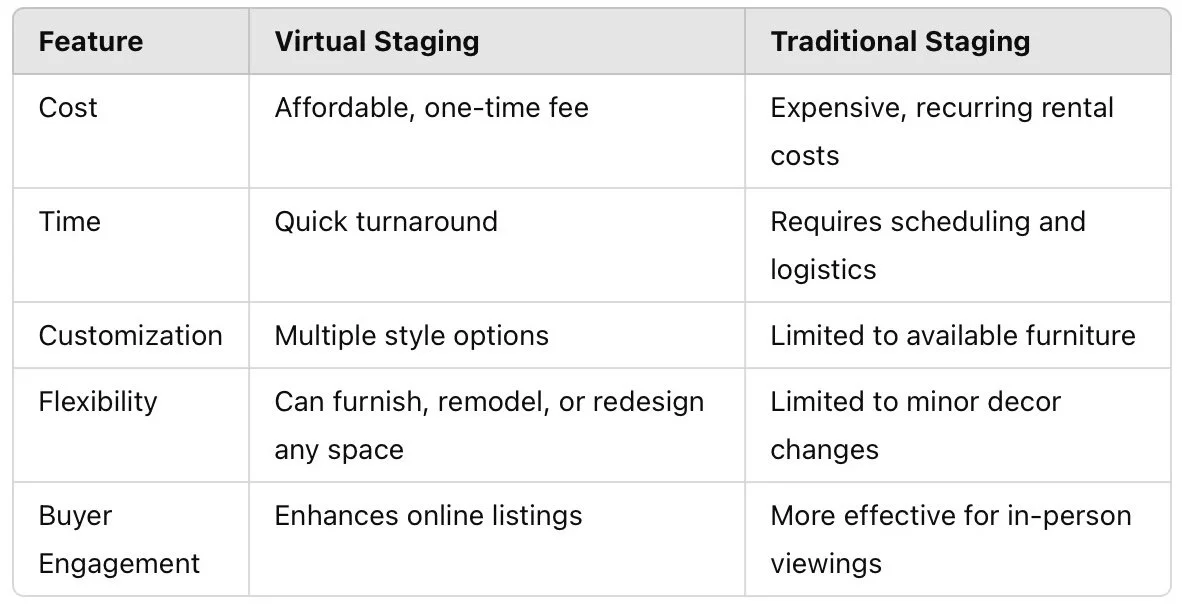
While traditional staging is still a great option for high-end properties or model homes, virtual staging offers unmatched flexibility and cost-effectiveness for most sellers.
The Future of Virtual Staging
As technology advances, virtual staging is becoming even more sophisticated. Innovations in AI and 3D rendering allow for hyper-realistic staging that is nearly indistinguishable from real furniture. Future trends include:
Interactive 3D Virtual Tours – Buyers can walk through a staged home virtually, enhancing the online viewing experience.
Augmented Reality (AR) Staging – Potential buyers can use AR apps to see different furniture styles and layouts in real-time.
Smart Staging Suggestions – AI-driven recommendations based on buyer preferences and demographics.
Virtual staging is no longer just an alternative to traditional staging—it’s becoming a standard in real estate marketing.
Conclusion
In an industry where first impressions matter, virtual staging is an invaluable tool for real estate professionals. It enhances property listings, attracts more buyers, and helps homes sell faster and at higher prices. By digitally furnishing, remodeling, or redesigning any space, virtual staging provides a cost-effective, flexible, and highly impactful solution for showcasing a property’s full potential.
Whether you’re an agent, developer, or homeowner looking to maximize your sale, virtual staging is a game-changing investment. If you're ready to transform your listings and captivate buyers, now is the time to embrace the future of real estate marketing.
Want to see how virtual staging can elevate your listings? Contact us today to get started!

Exploring New Dimensions: The Future of 3D Virtual Tours
The 3D virtual tour industry is on the brink of a revolutionary leap, driven by groundbreaking advancements and an insatiable appetite for immersive experiences. As we delve into 2024, several key trends are shaping the future of virtual tours, promising to transform how we interact with spaces digitally, making them indispensable in real estate, tourism, hospitality and education.
The 3D virtual tour industry is on the brink of a revolutionary leap, driven by groundbreaking advancements and an insatiable appetite for immersive experiences. As we delve into 2024, several key trends are shaping the future of virtual tours, promising to transform how we interact with spaces digitally.
Augmented Reality Takes Center Stage: Augmented Reality (AR) is redefining the virtual tour experience, offering users an unparalleled level of interaction and engagement. By overlaying digital information onto the real world, AR enhances virtual tours, making them more informative and immersive. Hello Apple Vision Pro!
360 Virtual Tours Dominate: With a commanding presence, 360 virtual tours continue to dominate the market. These tours provide a panoramic view, allowing users to explore every nook and cranny of a location as if they were there, making them indispensable in real estate, tourism, hospitality and education.
The Rise of 3D Virtual Reality Tours: Virtual Reality (VR) tours represent the cutting edge of immersive technology. Offering a fully immersive experience, VR tours allow users to navigate a virtual environment in an incredibly lifelike manner, opening new avenues in gaming, education, and training.
Industry-Wide Adoption: From travel and tourism to education and e-commerce, various sectors are embracing 3D virtual tours. They serve as a powerful tool for showcasing destinations, properties, products, and historical sites, enhancing customer engagement and satisfaction across the board.
Technological Innovations and Challenges: As the industry grows, so do the technological innovations that drive it forward. However, challenges such as ensuring high-quality, glitch-free experiences and safeguarding user data remain paramount.
As we look to the future, the 3D virtual tour industry stands at the cusp of a new era. By embracing these trends and overcoming the associated challenges, the industry can unlock a world of possibilities, making distant or imagined spaces accessible to all.
Contact us today at 437-775-9000or visit our website at https://lightbound3d.com to explore how the future of virtual tours can transform your business. Let's embark on this digital journey together – your gateway to innovation awaits!